

您在这里:
- Home
- PRODUCT
- Excavator
- Caterpillar
- 2020 CAT 345D Used Excavator 45 Ton Crawler for Sa…
2020 CAT 345D Used Excavator 45 Ton Crawler for Sale
1-2 Unit$85,800
>=3 Units$83,888
(Price is FOB . Contact WhatsApp for CIF price & shipping cost.)
The Cat® 345D hydraulic excavator is a 45-ton class production machine engineered for the most demanding heavy-duty applications. Built with a powerful Cat C13 ACERT® engine delivering 380 horsepower and a high-performance hydraulic system producing 734 L/min of flow, the 345D delivers class-leading digging forces, exceptional lift capacity, and outstanding production rates in quarry, mining, and large-scale earthmoving operations.
Designed to meet U.S. EPA Tier 3 emission standards, the 345D offers the perfect balance of power, reliability, and fuel efficiency—without the complexity of DPF or DEF aftertreatment systems found on newer Tier 4 Final machines. This makes the 345D a smart, cost-effective choice for contractors who need maximum productivity with lower ownership costs.
Key Specifications
| Parameter | Standard Undercarriage | Long Undercarriage (L) |
|---|---|---|
| Engine Model | Cat® C13 ACERT® | Cat® C13 ACERT® |
| Net Power (SAE J1349) | 283 kW (380 hp) | 283 kW (385 hp) |
| Gross Power (ISO 14396) | 287 kW (385 hp) | 287 kW (385 hp) |
| Displacement | 12.5 L (763 in³) | 12.5 L |
| Bore × Stroke | 130 mm × 157 mm | 130 mm × 157 mm |
| Operating Weight | 44,970 kg (99,150 lb) | 48,250 kg (106,373 lb) |
| Main Hydraulic Flow (Total) | 734 L/min (194 gpm) | 734 L/min (194 gpm) |
| Max Pressure – Equipment | 35,000 kPa (5,080 psi) | 35,000 kPa (5,080 psi) |
| Heavy Lift Mode Pressure | — | 38,000 kPa (5,511 psi) |
| Swing Speed | 8.9 rpm | 8.9 rpm |
| Swing Torque | 149 kN·m (109,897 lb/ft) | 149 kN·m (109,897 lb/ft) |
| Max Travel Speed | 4.7 km/h (2.9 mph) | 4.7 km/h (2.9 mph) |
| Max Drawbar Pull | — | 338 kN (75,987 lb) |
| Fuel Tank Capacity | 705 L (186 gal) | 705 L (186 gal) |
| Hydraulic System Capacity | 570 L (150 gal) | 570 L (150 gal) |
| Bucket Capacity Range | 1.8 – 3.5 m³ | 1.8 – 3.5 m³ |
Working Ranges
| Parameter | Standard Undercarriage | Long Undercarriage (L) |
|---|---|---|
| Max Digging Depth | 8,920 mm (29.3 ft) | 7,910 mm (26.0 ft) |
| Max Reach at Ground Level | 12,940 mm (42.5 ft) | 11,350 mm (37.2 ft) |
| Max Dumping Height | 7,550 mm (24.8 ft) | 7,530 mm (24.7 ft) |
| Max Digging Height | 10,350 mm (34.0 ft) | 10,110 mm (33.2 ft) |
| Track Length | 5,170 mm (17.0 ft) | 5,420 mm (17.8 ft) |
| Track Shoe Width | 750 mm (29.5 in) | 750 mm (29.5 in) |
Core Strengths
1. Powerful C13 ACERT Engine
The Cat C13 ACERT engine delivers 380–385 horsepower, offering 10% more power than the previous C-Series model. The ACERT Technology works at the point of combustion to optimize fuel delivery, air management, and electronic controls, providing:
-
Exceptional power and torque for heavy digging and truck loading
-
U.S. EPA Tier 3 compliance — no DPF or DEF aftertreatment required
-
Proven reliability with extended service life
-
Alternative power modes that can reduce fuel consumption by up to 10% while maintaining productivity
2. High-Performance Hydraulic System
The 345D features a load-sensing hydraulic system with dual variable-displacement pumps delivering a total flow of 734 L/min (194 gpm) :
-
Cross-sensing technology allows either pump to deliver 100% power to any function
-
Heavy Lift Mode (L models) increases pressure to 38,000 kPa for maximum lifting capacity
-
SmartBoom™ technology optimizes boom performance for faster cycle times
-
Proven reliability and outstanding controllability
3. Heavy-Duty Undercarriage and Structure
The 345D is built for the toughest applications:
-
X-shaped box-section carbody for superior strength
-
Long undercarriage option with 52 shoes and 9 track rollers per side for enhanced stability
-
Grease-lubricated tracks for extended service life
-
Reinforced boom and stick with high-strength welded box construction
-
Robotic welding for consistent, high-quality welds
4. Operator Comfort and Control
The 345D’s cab is designed for maximum productivity and operator comfort:
-
Spacious, quiet, and comfortable operator station
-
Adjustable suspension seat with multiple adjustments
-
Air conditioner, heater, and defroster for all-weather comfort
-
Integrated auxiliary and swing boom functions to reduce fatigue
-
Auto idle function to reduce fuel consumption during idle periods
-
Full-color LCD monitor with information display
5. Simplified Maintenance
The 345D is designed for easy serviceability:
-
Modular electronic control systems for greater flexibility and lower repair costs
-
S·O·S sampling ports for engine oil, hydraulic oil, and coolant
-
Convenient service access with grouped service points
-
Extended service intervals to reduce downtime
-
Caterpillar global dealer network for parts and service support
Applications
The CAT 345D is ideally suited for:
-
Quarry operations — loading trucks, ripping, and primary excavation
-
Mining support — overburden removal, stockpile management
-
Large-scale earthmoving — site preparation, mass excavation
-
Infrastructure projects — highway construction, dam building, major utilities
-
Heavy demolition — structural demolition with hydraulic attachments
Why Choose the 345D?
| Feature | Benefit |
|---|---|
| 380 hp C13 ACERT Engine | Class-leading power and reliability |
| No DPF/DEF Aftertreatment | Lower maintenance costs, fewer failure points |
| 734 L/min Hydraulic Flow | Outstanding productivity and cycle times |
| Heavy Lift Mode (L models) | Maximum lifting capacity for heavy loads |
| Long Undercarriage Option | Superior stability for heavy digging and lifting |
| Proven Tier 3 Compliance | Meets EPA standards without expensive aftertreatment |
| Global Dealer Network | Parts and service available worldwide |
| Strong Resale Value | Cat equipment holds value better than competitors |
Available Configurations
-
345D — Standard undercarriage
-
345D L — Long undercarriage for enhanced stability
-
Various bucket options — 1.8 m³ to 3.5 m³ capacity
-
Optional hydraulic attachments — hammers, shears, grapples, thumbs
Summary
The CAT 345D is a proven 45-ton production excavator that delivers class-leading power, hydraulic performance, and reliability. With its C13 ACERT engine, 734 L/min hydraulic flow, and durable undercarriage, the 345D is built to handle the most demanding applications in quarry, mining, and heavy construction. The machine’s Tier 3 emissions compliance—without DPF or DEF aftertreatment—offers significant advantages for used buyers seeking lower operating costs and reduced complexity.
Whether you’re loading trucks in a quarry, removing overburden in a mine, or excavating for a major infrastructure project, the CAT 345D provides the power, durability, and productivity you need to get the job done.
Contact Us
For more information about our available CAT 345D units, including year, hours, condition, and pricing, please contact our sales team today. We offer comprehensive inspection reports, service records, and support to ensure you find the right machine for your operation.
Product specifications may vary by configuration. Please verify exact specifications with your sales representative based on the specific unit in stock.
| Brand | CAT, Caterpillar |
|---|---|
| Country of Origin | Japan |
| Year | 2020 |
| Model Number | 345 |
| Working Hours | 500H |
Categories: Caterpillar, Excavator
Tags: CAT345, CAT345 Excavator, Caterpillar CAT345, Caterpillar CAT345 Excavator, caterpillar excavator, Construction Machinery, large digger, large excavator, Used CAT345, Used CAT345 Excavator, Used Caterpillar CAT345, Used Caterpillar CAT345 Excavator, used digger, used excavator
Product Categories
Product Specifications
| Parameter | Value (Metric / Imperial) |
|---|---|
| Model | CAT 345D (D-Series) |
| Product Type | Crawler Hydraulic Excavator |
| Engine Model | Cat® C13 ACERT® |
| Net Power (ISO 9249) | 283 kW (380 hp) |
| Displacement | 12.5 L (763 in³) |
| Operating Weight | 44,970–48,250 kg (99,150–106,373 lb) |
| Bucket Capacity | 1.8–3.5 m³ |
| Max Digging Depth | 7,600 mm (24.9 ft) |
| Max Reach at Ground Level | 11,700 mm (38.4 ft) |
| Max Travel Speed | 4.7 km/h (2.9 mph) |
| Swing Speed | 8.9 rpm |
| Fuel Tank Capacity | 705 L (186 gal) |
| Transport Length | 12,450 mm (40.8 ft) |
| Transport Width | 3,640 mm (11.9 ft) |
| Transport Height | 3,680 mm (12.1 ft) |
| Main Hydraulic Flow | 734 L/min (194 gpm) |
Product Pictures
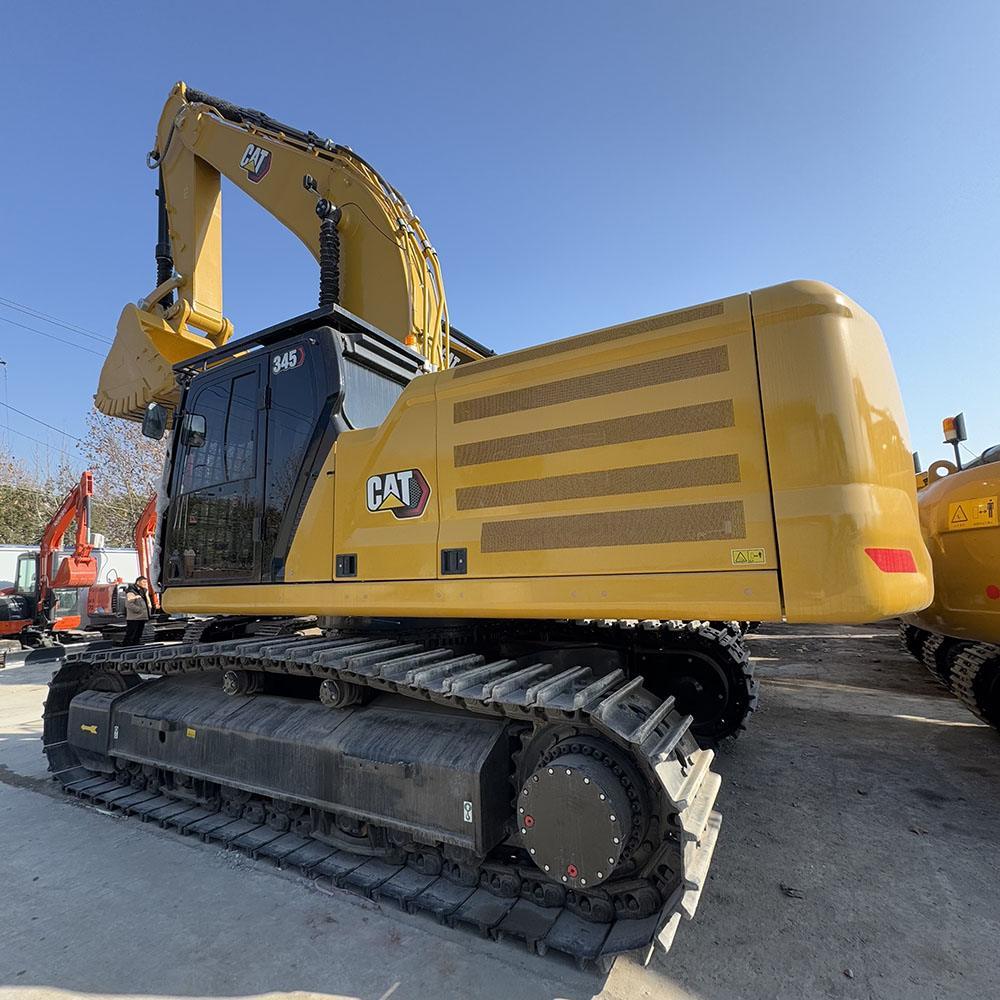
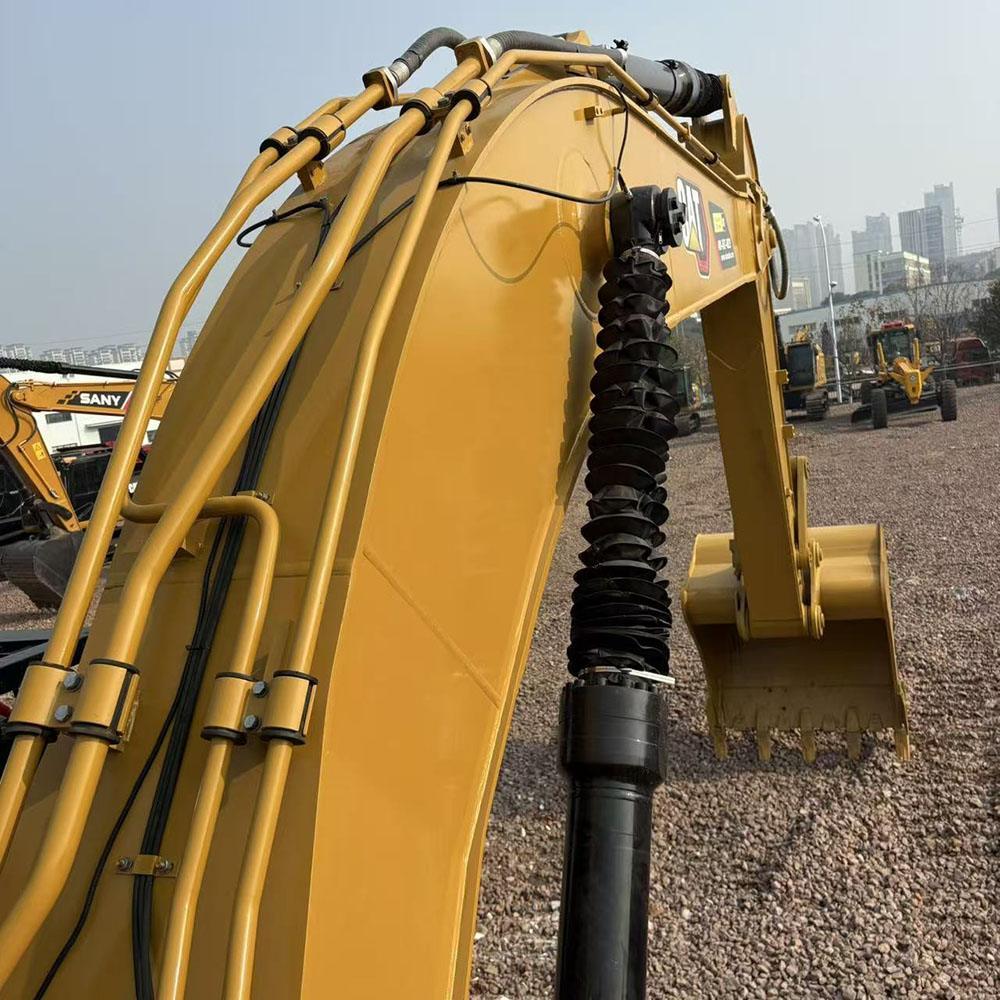


Expert Inspection Report
The Caterpillar 345D represents a defining moment in the 45-ton excavator class. Introduced in 2008 as the successor to the 345C and produced until approximately 2011, the 345D was engineered to deliver substantially more power—10% more than its predecessor—while meeting stringent U.S. EPA Tier 3 emission regulations. For used buyers in 2026, this machine offers a compelling value proposition: proven C13 ACERT engine reliability, outstanding hydraulic performance, and the legendary Cat build quality—all at a fraction of the cost of newer Tier 4 Final machines. However, with production ending over a decade ago, understanding the 345D’s specific strengths, known weaknesses, and realistic ownership costs is essential before making a purchase decision. This comprehensive review draws on official Caterpillar specifications, owner testimonials, forum discussions, and market data to provide a thorough, objective assessment.
Market Positioning: The 45-Ton Heavyweight
The 345D sits in Caterpillar’s 45-ton excavator class, designed for heavy-duty applications including mining, quarry operations, large-scale earthmoving, and major infrastructure projects. It is offered in both standard and Long Undercarriage (L) configurations, with the L version providing enhanced stability for heavy digging and lifting. The machine is positioned above the 336D (36-ton class) and below the 349D (49-ton class), making it an ideal choice for contractors who need serious production capability without stepping up to the even larger machines.
At the time of its introduction, the 345D was designed for “matched performance with Cat articulated trucks”, reflecting Caterpillar’s integrated approach to quarry and mining operations. The 345D L, in particular, was engineered to deliver more material moved per unit of fuel burned, with alternative power modes capable of reducing fuel consumption by up to 10% while maintaining productivity comparable to the C-Series model.
Production notes: The 345D was primarily produced for the North American and European markets from 2008 to 2011. There is also a Japan-only 345D variant, which sometimes appears in other markets as a grey-market import. The 345D L, with its extended undercarriage, was the more common configuration in most regions.
Key market insight: The 345D’s Tier 3 emissions compliance is a significant advantage for used buyers. Unlike newer Tier 4 Final machines, the 345D does not require a Diesel Particulate Filter (DPF) or Diesel Exhaust Fluid (DEF) . This eliminates two of the most common and expensive failure points on modern diesel equipment, making the 345D particularly attractive for buyers in markets with variable fuel quality or limited access to dealer support for aftertreatment systems.
Core Specifications: The Numbers That Matter
The 345D is built around the Cat C13 ACERT® diesel engine—a 12.5-liter, 6-cylinder turbocharged powerplant that represents one of Caterpillar’s most refined pre-Tier 4 engine designs.
| Parameter | Standard Undercarriage | Long Undercarriage (L) |
|---|---|---|
| Engine Model | Cat® C13 ACERT® | Cat® C13 ACERT® |
| Net Flywheel Power | 283 kW (380 hp) | 283 kW (385 hp) |
| Bore × Stroke | 130 mm × 157 mm (5.1 in × 6.2 in) | 130 mm × 157 mm |
| Displacement | 12.5 L (763 in³) | 12.5 L |
| Operating Weight | 44,970 kg (99,150 lb) | 48,250 kg (106,373 lb) |
| Swing Speed | 8.9 rpm | 8.9 rpm |
| Swing Torque | 149 kN·m (109,897 lb/ft) | 149 kN·m |
| Max Travel Speed | 4.7 km/h (2.9 mph) | 4.7 km/h |
| Max Drawbar Pull | — | 338 kN (75,987 lb) |
| Main Hydraulic Flow (Total) | 734 L/min (194 gpm) | 734 L/min |
| Max Pressure – Equipment | 35,000 kPa (5,080 psi) | 35,000 kPa |
| Max Pressure – Heavy Lift | — | 38,000 kPa (5,511 psi) |
| Max Pressure – Swing | 31,400 kPa (4,550 psi) | 31,400 kPa |
| Fuel Tank Capacity | 705 L (186 gal US) | 705 L |
| Hydraulic System (incl. tank) | 570 L (150 gal US) | 570 L |
| Hydraulic Tank | 243 L (64 gal US) | 243 L |
| Engine Oil Capacity | 42 L (11 gal US) | 42 L |
| Cooling System | 35.5 L (9.4 gal US) | 35.5 L |
Transport Dimensions (345D):
-
Transport Length: 12.45 m (40.8 ft)
-
Transport Width: 3.64 m (11.9 ft)
-
Transport Height: 3.68 m (12.1 ft)
-
Track Width: 750 mm (29.5 in)
-
Max Dredging Depth: 8.92 m (29.3 ft)
-
Max Horizontal Reach: 12.94 m (42.5 ft)
What these numbers tell you: The 345D delivers 380–385 hp from a 12.5-liter engine—class-leading power for its weight. The 734 L/min hydraulic flow is substantial, providing the muscle for heavy digging and truck loading. The 8.9 rpm swing speed is competitive, and the 149 kN·m swing torque ensures smooth, powerful rotation even with a full bucket.
Bucket Capacity Range: The 345D can be equipped with buckets ranging from 1.8 m³ to 3.5 m³, depending on the application and material density. The standard bucket capacity is approximately 1.8 m³, with larger buckets available for lighter materials and smaller buckets for heavy rock.
Shoe Count (Undercarriage Details):
-
Standard Undercarriage: 49 shoes per side, 8 track rollers per side
-
Long Undercarriage: 52 shoes per side, 9 track rollers per side
The C13 ACERT Engine: Power and Reliability
The heart of the 345D is the Cat C13 ACERT engine, a 12.5-liter, 6-cylinder turbocharged diesel that represented the pinnacle of Caterpillar’s pre-Tier 4 engine technology. According to Caterpillar, the C13 with ACERT Technology was “built for power, reliability, economy and low emissions”.
ACERT Technology Explained: ACERT (Advanced Combustion Emission Reduction Technology) works at the point of combustion to optimize engine performance and provide low exhaust emissions. The technology utilizes three core elements—fuel, air, and electronics—to achieve complete combustion. The fuel system uses an electronically controlled, mechanically actuated unit injection (MEUI) system that provides the high injection pressures needed for complete atomization and combustion.
Key Engine Features:
-
10% more power than the previous C-Series model
-
Meets U.S. EPA Tier 3 emission regulations
-
No DPF or DEF required—significantly reduces complexity and maintenance costs compared to Tier 4 Final machines
-
ADEM™ A4 Engine Controller manages fuel delivery to optimize performance per liter or gallon of fuel used
-
Proven reliability with exceptional performance capabilities and exceptional service life
Real-World Fuel Consumption: One of the most frequently discussed aspects of the 345D is its fuel consumption. According to multiple owner reports, the 345D consumes approximately 50 liters per hour under typical heavy operating conditions. In less intensive applications, the machine offers alternative power modes that can reduce fuel consumption by up to 10% while maintaining productivity comparable to the C-Series model.
Expert note: The 50 L/h figure is based on heavy-duty quarry and mining applications. For general earthmoving or lighter work, consumption will be lower. However, buyers should be aware that the 345D is a large, powerful machine—it consumes fuel accordingly. Compared to the 328D (a smaller machine in the Cat lineup), the 345D consumes approximately 30–50% more fuel per hour. This is not a defect; it is simply the cost of operating a 45-ton production machine.
Power and Performance in the Field: The 345D’s power advantage over competitors is significant. One forum participant noted: “A CAT 345D weighs 100,000 pounds and has 380 horsepower. Obviously the 345D has 80 more horsepower [than a 568 roadbuilder], so it’ll be able to move more dirt”. Another user confirmed that the 345D, “in high-production mode, will eat any of its current competition at the expense of fuel consumption”.
The Trade-off: As one forum member summarized: “In one of its economy modes, performance is about on-par with a single-digit fuel economy advantage to the Cat”. This means the 345D offers operators the flexibility to choose between maximum production (with higher fuel consumption) or improved fuel economy (with slightly reduced performance).
Hydraulic System: Designed for Heavy Work
The 345D’s hydraulic system was “designed to provide reliability and outstanding controllability”. Key features include:
Main System Specifications:
-
Total flow: 734 L/min (194 gpm)—among the highest in its class
-
Maximum equipment pressure: 35,000 kPa (5,080 psi)
-
Heavy Lift Mode pressure: 38,000 kPa (5,511 psi)—available on L models
-
Swing circuit pressure: 31,400 kPa (4,550 psi)
-
Pilot system flow: 43 L/min (11 gpm)
-
Pilot system pressure: 4,110 kPa (596 psi)
Hydraulic Cross-Sensing System: The 345D features a hydraulic cross-sensing system that “utilizes each of two hydraulic pumps to 100%”. This means each pump can deliver full power to any function when needed, ensuring no loss of performance under heavy load. This is particularly valuable when performing compound actions—simultaneous digging, swinging, and lifting—where consistent power delivery is essential for productivity.
SmartBoom™ Technology: The 345D features SmartBoom™ technology, which “increases productivity through faster cycle times on truck loading and rock scraping applications and maintains optimum hammering frequency for effective, steady productivity”. This system automatically adjusts boom performance based on the application, improving efficiency in loading and rock-breaking operations.
Boom and Stick Cylinders:
-
Boom Cylinder: 160 mm bore × 1,575 mm stroke
-
Stick Cylinder: 190 mm bore × 1,758–1,778 mm stroke (depending on front configuration)
-
Bucket Cylinder (TB Family): 160 mm bore × 1,356 mm stroke
-
Bucket Cylinder (UB Family): 170 mm bore × 1,396 mm stroke
Optional Tool Control System: An optional Tool Control System “provides enhanced flexibility”, allowing operators to fine-tune hydraulic performance for specific attachments such as hammers, shears, and grapples.
Operator Comfort and Cab Features
The 345D’s operator station was designed for long-hour productivity. According to Caterpillar, the cab provides “a comfortable environment for the operator” with “high digging forces and fast cycle times to help you get more done, faster”.
Key Cab Features:
-
Quiet, spacious cab with smooth ergonomic controls
-
Adjustable suspension seat allowing a variety of adjustments to suit the operator’s size and weight
-
Air conditioner, heater, and defroster for all-weather comfort
-
Lighter, drink holder, coat hook, service meter, literature holder, magazine rack, and storage compartment
-
Integrated auxiliary and swing boom functions to reduce operator fatigue
-
Auto idle function to reduce fuel consumption during idle periods
Owner Feedback on Comfort: One owner described the cab as having “everything for a comfortable work”. Another praised the “excellent cabin view. The levers are light, the onboard computer has no glitches”. A 345D owner who used the machine in a mountain construction site reported that the cab has “good visibility” and is “easy to control”.
Quiet Operation: The 345D’s cab is designed to minimize noise, with cabin noise levels “nicely contained, enhancing focus during extended jobs”. This is a significant advantage for operators working long shifts in demanding conditions.
Ergonomic Controls: The controls are designed for natural wrist and arm positioning, reducing operator fatigue during extended operation. The “Pin-Grabber Coupler and quick disconnects enable the operator to change mini excavator attachments quickly”, improving versatility and reducing downtime between tasks.
Reliability: The Good and the Known Issues
The 345D has earned a strong reputation for reliability, with aggregate owner reviews rating Caterpillar excavators 4.4 out of 5 for reliability. However, like any complex piece of heavy equipment, the 345D has documented issues that used buyers should be aware of.
The Good:
1. Engine Reliability. The C13 ACERT engine is widely regarded as one of Caterpillar’s most durable pre-Tier 4 engines. One owner running two 345Ds in a quarry operation since 2020 reported the machines performed reliably. The engine’s ACERT technology provides “exceptional performance capabilities and proven reliability”.
2. Structural Durability. The 345D’s structural components are “designed conservatively, with strong durability and high second-hand residual value”. The undercarriage is “stable, durable and low maintenance”.
3. Hydraulic System Robustness. The hydraulic system is designed for reliability and outstanding controllability.
The Watch-Outs (Common Issues):
1. Overheating Problems. A documented case on a 2012 345D L involved persistent overheating despite extensive troubleshooting. The owner had performed a full service, replaced the thermostat (and even tried removing it completely), replaced the temperature sensor, serviced the oil coolers, replaced the pre-cleaner, serviced the radiator, and replaced the water pump—yet the engine still reached 98°C (208°F).
Potential causes discussed in the forum:
-
Waste gate on the turbo not functioning properly
-
Exhaust restriction
-
Fan speed issues—less than 100 RPM low can cause problems
-
98°C thermostat—some engines run a high-temperature thermostat, and by the time it’s fully open, the engine may already be running too hot
For used buyers: If a 345D exhibits overheating symptoms, it requires systematic diagnosis. Check the fan speed, exhaust system, turbo waste gate, and cooling system components. The 98°C thermostat may be a contributing factor in hot climates.
2. Stick Circuit Problems. A detailed forum thread documented a 345D with “no stick in digging power” despite pump pressures being within specification. The owner had replaced the regeneration valve, reliefs, drift reduction valve, and even the cylinder itself—yet the problem persisted. The symptom was a “grumbling” in the stick lines when bringing the stick in.
Diagnosis: The issue was eventually traced to the stick drift reduction valve not opening properly. The problem manifested as the rod end fighting the head end of the cylinder, with pumps going to maximum pressure and the stick moving slowly.
For used buyers: Test the stick function thoroughly. If the stick is slow or weak, particularly when retracting, the drift reduction valve may be the culprit. This is a complex repair that requires specialized diagnostic equipment.
3. Hydraulic Pump Wear. The 345D’s hydraulic pumps can develop wear over time, particularly after 5,000+ hours of operation. Symptoms include:
-
Slow movement and insufficient pump oil supply
-
Decreased volumetric efficiency
-
Internal leakage causing reduced oil supply
For used buyers: If the machine exhibits slow hydraulic response or weak digging force, hydraulic pump wear is a likely cause. Pump rebuilds can be expensive ($5,000–10,000 depending on the extent of damage).
4. Fuel Injector Wiring Harness Issues. A known issue on the 345D involves the fuel injector wiring harness. One owner reported “erratic fault codes P0201 through P0206 and eventually lost power under load”. The 418-7614 fuel injector wiring harness is a direct replacement for 345D machines.
For used buyers: If the machine has intermittent fault codes or power loss, check the fuel injector wiring harness for damage. This is a relatively simple repair compared to some of the other issues listed here.
5. Swing Motor and Turntable Seal Leaks. A forum post documented a 345D with oil leaking from the swing gear or house bearing. The issue was traced to a swing motor leaking into the gear reduction unit, with a worn seal on the pinion gear. Checking the fluid levels in each swing reducer will reveal which side is leaking.
For used buyers: Inspect the swing gear area for oil leaks. If fluid levels in the swing reducers are low, seal replacement is likely needed.
6. Electrical and Sensor Issues. As with any electronically controlled machine, the 345D can develop electrical issues, including:
-
Intermittent throttle signal
-
Diagnostic trouble codes that may derate engine power
-
ECM software issues—the incorrect software for the ECM may be installed
For used buyers: Run a diagnostic scan with Cat ET (Electronic Technician) to check for active or logged fault codes before purchase.
7. Boom Cylinder Leaks. Common faults of the boom cylinder include leakage and sluggish operation. If leakage occurs at the piston rod, the seals usually need to be checked and replaced.
8. C13 Engine Fuel System Sensitivity. The C13’s MEUI fuel system, while robust, is sensitive to fuel quality and contamination. Regular filter changes and clean fuel are essential for long-term reliability.
Owner Reliability Verdict: A Machineryline review of the 345D gave it 5.0 for operation, 4.0 for reliability, and 4.0 for maintenance. The owner noted: “The machine has an excellent powerful engine. The tracks run perfectly. The cabin has everything for a comfortable work. Although, once our hydraulic system broke down. We had to pay a hefty sum for repairs, so don’t push the limits and it will serve you for a long time”. Another owner commented: “The excavator is good, I must say, as an experienced excavator operator. Excellent cabin view”.
Maintenance: Keeping the 345D Running
The 345D was designed for simplified service, with modular electronic control systems that “allow greater update, flexibility, improves serviceability and lowers repair costs”.
Recommended Maintenance Intervals:
| Component | Interval | Notes |
|---|---|---|
| Engine oil and filter | Every 500 hours | Use Cat-specified oil (42 L capacity) |
| Fuel filters | Every 500 hours | Genuine Cat filters recommended |
| Hydraulic return filter | Every 1,000–2,000 hours | Monitor with S·O·S sampling |
| Hydraulic oil change | Every 2,000–3,000 hours | 570 L total system capacity |
| Swing drive oil | First 250h, then every 1,000h | 10 L per drive |
| Final drive oil | First 250h, then every 1,000h | 15 L per drive |
| Coolant change | Every 2,000 hours | 35.5 L capacity |
S·O·S (Scheduled Oil Sampling): The 345D is equipped with S·O·S sampling ports for engine oil, hydraulic oil, and coolant. Regular oil analysis can extend change intervals while providing early warning of component wear.
Owner-Reported Maintenance Costs: One 345D owner in a mountain construction site noted that while the machine is powerful and efficient, “daily maintenance costs are slightly higher”. This is consistent with the machine’s size and complexity—larger machines have larger maintenance costs.
The 5,000-Hour Milestone: According to industry data, after 5,000 hours of operation:
-
Regular oil and filter changes are required
-
Hydraulic system components may begin to show wear
-
The volumetric efficiency of the hydraulic pump may decrease
Maintenance Complexity: Due to the machine’s size and complex structure, “professional operators and maintenance teams may be required”. This is an important consideration for smaller operations that may not have in-house maintenance capabilities.
Estimated 5,000-Hour Maintenance Cost Trends (Reference—USD):
| Maintenance Category | Estimated Cost (USD) | Notes |
|---|---|---|
| Engine oil + filter changes (10 × 500h) | $2,500–4,000 | Using genuine Cat parts |
| Fuel filters (10 × 500h) | $500–1,000 | Primary + secondary sets |
| Hydraulic oil + filter change (2–3 changes) | $2,000–3,500 | Based on 2,000–3,000h interval |
| Swing/final drive oil changes | $800–1,500 | Every 1,000h |
| Air filter replacements | $200–400 | |
| Undercarriage (tracks, sprockets, rollers) | $8,000–15,000 | Major wear item |
| Bucket teeth / wear parts | $2,000–5,000 | Depends on material handled |
| Labor (accumulated over 5,000h) | $5,000–10,000 | Varies significantly by region |
| Estimated 5,000-hour total (routine) | $21,000 – $40,400 | Excludes major repairs |
Note: These are estimated ranges. Actual costs vary by region, parts pricing, operating conditions, and maintenance history.
How the 345D Compares to Competitors
| Specification | CAT 345D | Komatsu PC400-8 | Hitachi ZX350 |
|---|---|---|---|
| Engine | Cat C13 ACERT | Komatsu SAA6D107E | Isuzu 6HK1X |
| Net power | 283–287 kW (380–385 hp) | ~257 kW (345 hp) | ~202 kW (271 hp) |
| Operating weight | 44,970–48,250 kg | ~42,000 kg | ~35,000 kg |
| Bucket capacity | 1.8–3.5 m³ | ~1.8–2.5 m³ | ~1.4–2.0 m³ |
| Hydraulic flow | 734 L/min | ~550 L/min | ~540 L/min |
| Max digging depth | 8.92 m | ~7.8 m | ~7.4 m |
| Max reach | 12.94 m | ~11.5 m | ~10.8 m |
| Tail swing | Standard / L | Standard | Standard |
| DPF/DEF required | No (Tier 3) | Varies | Varies |
| Dealer network | ★★★★★ | ★★★★ (Asia strong) | ★★★★ |
| Resale value | ★★★★★ | ★★★★ | ★★★★ |
CAT 345D advantages:
-
Significantly more power—380 hp vs. Komatsu’s ~345 hp and Hitachi’s ~271 hp
-
No DPF/DEF—simpler, cheaper to maintain than Tier 4 Final competitors
-
Larger bucket capacity—up to 3.5 m³ vs. competitors’ smaller buckets
-
Greater reach and depth—12.94 m reach and 8.92 m depth
-
Strongest resale value—Cat consistently holds value better than competitors
-
Excellent parts availability—Cat’s global dealer network is unmatched
Where competitors may win:
-
Komatsu PC400-8 offers Komtrax telematics and strong dealer network in Asia
-
Hitachi ZX350 is renowned for exceptionally smooth hydraulic control
The Verdict: One forum participant noted: “You have the 2 current models the 345D and 450D, each around 45 tons roughly”. Another observed that the 345D “in high-production mode, will eat any of its current competition”. The 345D is the clear choice for owners who need maximum production capability and are willing to accept higher fuel consumption in exchange for superior performance.
Used Market: What to Expect (2025–2026)
Used CAT 345D pricing varies significantly by year, hours, condition, attachments, and region. Based on recent market data:
Recent Auction Results (2025–2026):
| Date | Model | Price (USD) | Source |
|---|---|---|---|
| Dec 2025 | 2010 CAT 345D L | $14,000 | IronPlanet auction |
| Nov 2025 | 2010 CAT 345D L | $20,000 | IronPlanet auction |
| May 2025 | CAT 345D L | $47,000 | Online auction |
| Dec 2022 | CAT 345D L | $126,500 | Online auction |
| May 2021 | 2008 CAT 345D L | $46,000 | Online auction |
| Oct 2020 | 2010 CAT 345D L | $55,000 | Online auction |
Current Average Selling Prices:
-
Non-auction CAT 345D L listings: Average $49,900 USD
-
CAT 345D (non-L): Average $168,500 USD
Dealer / Private Sale Prices:
-
2012 CAT 345D: CAD $99,000 / USD $72,270 (special price: CAD $89,000 / USD $64,970)
-
Cat 345D (export market): As low as $66,000
-
Cat 345D (excellent condition): $55,000
Chinese Market Prices:
-
General range: 100,000–600,000+ RMB (approximately $14,000–85,000 USD)
-
One dealer offering: Approximately 620,000 RMB (for bulk purchases)
-
Wide variation based on hours, condition, and configuration
Price Trend Observations:
-
Auction prices for 2010 models have ranged from $14,000 to $59,000 in recent years
-
The wide variation reflects differences in machine condition, hours, and bidder interest
-
Well-maintained, low-hour machines command premium prices
-
The 345D L (long undercarriage) is generally more valuable than the standard version
Valuation Factors:
| Factor | Premium/Discount | Notes |
|---|---|---|
| Complete service records | +10–15% | Documentation reduces buyer risk |
| Low hours (under 5,000) | +$10,000–20,000 | Near-new condition commands premium |
| Long undercarriage (L model) | +$3,000–8,000 | Enhanced stability |
| Hydraulic thumb & quick coupler | +$3,000–6,000 | Adds significant functionality |
| Additional buckets | +$1,500–4,000 | Multiple buckets add versatility |
| Visible hydraulic leaks or fault codes | –20–40% | Indicates deferred maintenance |
| No service records | –10–20% | Highest inspection risk |
| Overheating issues | –30–50% | Difficult to diagnose and repair |
| Repainted / “detailed” machine | –5–15% | May hide problems |
Used Buyer’s Checklist
When evaluating a used CAT 345D, follow this comprehensive inspection protocol:
1. Verify machine identity, serial number, and variant. Check the serial number to confirm the exact model and year of manufacture. The 345D was produced from 2008 to 2011, with serial number prefixes indicating different production batches. Confirm whether the machine is a standard or Long Undercarriage (L) variant, as this affects operating weight and stability. The 345D is a conventional tail-swing machine—if you need a reduced-tail-swing configuration, consider other models.
2. Verify the engine model and emissions tier. The 345D should have the Cat C13 ACERT engine (12.5 L). Confirm that the machine meets Tier 3 emissions—this means no DPF or DEF systems, which is a major advantage for used buyers. If the machine has been modified with aftertreatment systems, proceed with caution.
3. Check for overheating issues (critical). This is one of the most commonly reported problems on the 345D. Run the machine under load for at least 30–60 minutes until it reaches operating temperature. Monitor the coolant temperature gauge—if it approaches or exceeds 98°C (208°F) under normal operating conditions, there may be a cooling system issue. Listen for the cooling fan—it should engage at high speed when the machine is working hard. Check the radiator and oil cooler for debris, damage, or bent fins. If the machine has a history of overheating, budget for a thorough cooling system diagnosis.
4. Cold-start the engine. Listen for unusual knocking, ticking, or rough idle. Watch for excessive smoke: black indicates fuel system issues (injectors or air filter restriction), blue indicates oil burning (piston ring or valve guide wear), white indicates coolant leak (head gasket or injector issue). Let the machine warm up fully—some issues only appear at operating temperature.
5. Test the stick function (critical). The stick drift reduction valve is a known weak point on the 345D. Cycle the stick in and out under load, paying attention to any “grumbling” noises or sluggish movement. If the stick is slow to retract or lacks digging power, the drift reduction valve may be failing. This is a complex repair—don’t assume it’s a simple fix.
6. Test all hydraulic functions. Operate the machine through its full range: boom raise/lower, stick in/out, bucket curl/dump, swing left/right, and travel forward/back. The machine should respond smoothly without hesitation, whining pumps, or jerky movements. Pay attention to compound actions—simultaneous operations should feel smooth and coordinated.
7. Check for hydraulic drift. Raise the boom to full height, shut off the engine, and time the drop. Significant drift within 5 minutes indicates failing cylinder seals or a faulty holding valve.
8. Inspect the hydraulic system for leaks. Look for oil stains around the main control valve, cylinders, hoses, and pumps. Pay special attention to the swing drive area—oil leaks from the swing motor or turntable seal are common.
9. Inspect the undercarriage thoroughly. The 345D’s undercarriage is a major wear item. Check track sag (should be 10–30 mm between the track and carrier roller). Inspect track shoes for uneven wear patterns. Check sprockets for “hooking” (pointed teeth, indicating imminent replacement). Examine rollers for flat spots, seized rotation, or leaking seals. Check idlers for scoring or misalignment. The L model has 52 shoes per side and 9 track rollers—inspect these additional components.
10. Check for structural cracks. Carefully inspect high-stress areas: boom foot (where the boom attaches to the frame), boom-to-stick pivot point, stick-to-bucket linkage, and main frame near the slew bearing. Look for weld repairs that may indicate previous cracking. Fresh paint in these areas should be treated as suspicious—it may be hiding cracks.
11. Run a diagnostic scan. Using Cat ET (Electronic Technician), check for active or logged fault codes—especially fuel system codes (P0201–P0206) and engine derate conditions. Pay attention to the fuel injector wiring harness—if the machine has intermittent fault codes, this may be the cause.
12. Check the fuel system. Ask the seller when the fuel filters were last changed. The C13’s MEUI fuel system is sensitive to contamination—regular filter changes are essential. Look for any signs of fuel system tampering or modification.
13. Request S·O·S oil analysis. This is the single most valuable pre-purchase test. Lab results for engine oil, hydraulic oil, and final drives reveal internal wear patterns, contamination, and fuel/coolant dilution before symptoms appear. Fine metal particles in engine oil indicate bearing wear; particles in hydraulic oil suggest pump wear.
14. Verify service records and maintenance history. A 345D with complete documentation—including engine oil changes, filter replacements, hydraulic oil analysis results, and major repair invoices—is worth a significant premium over one with unknown maintenance history. Verify that only genuine Cat filters have been used.
15. Beware of repainted machines. Fresh paint can hide cracks, weld repairs, and hydraulic leaks. Look for paint overspray on hydraulic hoses, wiring, and decals—telltale signs of a cosmetic refresh intended to hide problems.
16. Verify hours and condition. Compare the hour meter reading with visible wear on pedals, joysticks, bucket pins, and interior panels. Inconsistent wear patterns may indicate hour meter tampering—a real risk in the used market.
When to Walk Away
A used 345D can be an excellent investment when properly maintained, but the following red flags should prompt you to walk away or drastically discount the price:
-
Persistent overheating despite recent cooling system service—this can indicate a cracked head, failed head gasket, or other serious engine damage
-
Stick function problems that the seller cannot explain—drift reduction valve issues can be complex and expensive to diagnose
-
Active hydraulic leaks at multiple points—seals and hoses are wear items, but multiple leaks suggest deferred maintenance
-
Hydraulic pump whining under load—indicates internal wear or cavitation; rebuild costs are significant
-
Active fault codes on the ECU that the seller cannot explain—especially fuel system codes
-
Obvious structural repairs (fresh welds, heat discoloration) on boom or stick without documentation of professional repair
-
Refusal to allow S·O·S oil analysis or diagnostic scan—a seller who blocks access is hiding something
Final Verdict: Is a Used 345D Right for You?
The CAT 345D is one of the most respected 45-ton excavators in the global market. Its combination of the proven C13 ACERT engine, powerful hydraulic system, and Caterpillar’s unmatched global parts support has kept it relevant long after production ended. For used buyers in 2026, the 345D offers a compelling value proposition—provided you understand what you’re buying and can perform proper due diligence.
Who should buy a used CAT 345D:
-
Quarry and mining operators needing a durable, high-production 45-ton excavator with class-leading power and no DPF/DEF complexity
-
Large-scale earthmoving contractors requiring serious production capability for major infrastructure projects
-
Owners who prioritize power and durability over absolute fuel efficiency—the 345D delivers maximum production but consumes fuel accordingly
-
Buyers in regions with variable fuel quality—the C13’s MEUI fuel system is more tolerant of fuel quality variations than common-rail systems
-
Operations with access to strong Cat dealer support—parts availability and service expertise are critical for long-term reliability
-
Buyers who value resale value—the 345D holds its value better than most competitors
Who should look elsewhere:
-
Operators working primarily in confined spaces—the 345D is a large, conventional-tail-swing machine
-
Buyers who cannot access Cat dealer support—OEM parts are essential for the C13’s fuel system reliability
-
Owners who prioritize fuel efficiency above all else—the 345D consumes approximately 50 L/h in heavy applications
-
Those who need Tier 4 Final emissions compliance—the 345D meets Tier 3 only
-
Buyers without access to skilled heavy equipment technicians—the 345D is a complex machine requiring specialized knowledge
The bottom line: A well-maintained CAT 345D with documented service history, clean S·O·S oil analysis, and a healthy hydraulic system will deliver thousands of hours of reliable service and hold its value better than most competitors in its class. The C13 ACERT engine provides class-leading power, and the 734 L/min hydraulic flow ensures outstanding productivity in demanding applications. The machine’s Tier 3 emissions compliance—meaning no DPF or DEF systems—represents a significant advantage over newer Tier 4 Final machines for buyers who want to avoid aftertreatment complexity and costs.
However, the 345D is not without its challenges. The 50 L/h fuel consumption is substantial, and the machine’s documented issues—particularly overheating and stick drift reduction valve problems—mean that thorough pre-purchase inspection is absolutely essential. The 345D is a machine for owners who value power, durability, and production capability above all else—and who are willing to accept the associated operating costs.
For contractors who need a 45-ton production machine and have the resources to maintain it properly, the used CAT 345D remains one of the smartest buys in today’s market. Its combination of Cat build quality, mechanical simplicity (no DPF/DEF), and strong resale value makes it a machine that will serve its owner well for years to come. Just go in with eyes open—know the common issues, budget accordingly for maintenance, and follow a disciplined inspection routine before purchase.
Company Description
Taihongmachinery (TH Engineering Equipment Limited) is a premier global supplier specializing in the export of high-quality, pre-owned heavy construction equipment.
Our company sells Caterpillar,Komatsu,Sany,Doosan,Hyundai,Hitachi,Volvo,Kubota used excavators, used bulldozers, used loaders, used graders, used cranes, used rollers, etc. With a strategic focus on the international trade of used excavators, we have established ourselves as a cornerstone of reliability for clients across Southeast Asia, South Asia, the Middle East, Africa, and South America.
Shipping & Delivery Policy
At Taihong Machinery, we provide flexible global logistics solutions for all our used heavy machinery.
Shipping Method: We recommend working with professional international freight forwarders specializing in heavy equipment (RORO or Flat Rack container shipping).
Flexibility: We are happy to work with your preferred freight forwarder. If you do not have one, we can leverage our network of reliable, certified global logistics partners to provide competitive shipping quotes to your nearest port.
Preparation: All machines undergo professional cleaning and safety inspections prior to loading to ensure they meet international shipping regulations.
Documentation: We provide all necessary export documentation, including Bills of Lading, Packing Lists, and Commercial Invoices, to ensure smooth customs clearance at the destination.
Return & Refund Policy
We provide a detailed pre-shipment inspection report and live video call to confirm machine condition. Returns are generally not accepted, but if the machine does not match the inspection report, we will negotiate a resolution.
Inspection: We encourage all buyers to conduct a thorough inspection of the machine, either in person at our yard in China or via live video consultation with our technicians.
Pre-shipment Verification: Before the machine leaves our yard, we provide a full functional test report and live video proof of the engine, hydraulic, and structural condition. Once the buyer confirms the machine status and the machine is loaded for export, we do not accept returns.
Warranty: All equipment is sold in “as-is” condition. We are committed to transparency and will disclose all known technical details prior to purchase.
Support: Should any issues arise during the shipping process, we will provide full support in communicating with your insurance provider and the shipping line.
Success Cases


A:
The 345 Series occupies a critical niche in Caterpillar‘s large excavator lineup —above the 336 (~36–38 tons) and below the 349 (~49–50 tons). This places it squarely in the “heavy production” excavator class: powerful enough for tough quarry and mining applications, yet still manageable for mass earthmoving, road construction, and heavy infrastructure projects. The 345 family encompasses multiple generations, each with its own engine technology, emission standards, and target applications.
Generation overview:
| Generation | Years | Engine | Net Power | Weight Range | Key Features |
|---|---|---|---|---|---|
| 345B Series II | 1997–2005 | Cat 3176C ATAAC | 239 kW (321 hp) | 44,460–50,420 kg | Long undercarriage standard; predecessor to ACERT engines |
| 345C / C L | 2006–2011 | Cat C13 ACERT | 239 kW (321 hp) | 44,970–67,000 kg | First ACERT engine; 8% more horsepower than 345B |
| 345D / D L | 2008–2017 | Cat C13 ACERT | 283 kW (380 hp) | 44,970–48,250 kg | 10% more power than 345C L; EPA Tier 3 |
| 345GC | 2018–present | Cat C9.3B | 258 kW (346 hp) | 42,200–43,300 kg | Next Gen technology; 25% better fuel efficiency |
A:
Across generations, the 345 family enjoys a reputation for durability. One UK owner of a 17-year-old 345C noted that the decision to perform a full rebuild rather than replace the machine was driven by “sustainability, cost and the company’s fondness of the excavator due to its reliability”. Aggregated owner feedback from Machineryline shows a reliability rating of 4.0/5, a maintenance rating of 5.0/5, and an operation rating of 4.0/5, with owners emphasizing the machine’s “excellent powerful engine” and that “the tracks run perfectly”.
Performance highlights:
-
Gradeability. The 345 Series is capable of climbing a 70% slope, delivering excellent off-road mobility that few machines in its class can match.
-
Fuel Efficiency (GC models). The 345GC increases fuel efficiency (cubic meters/tonnes per unit of fuel) up to 25% and lowers operating costs up to 30% compared to previous models, thanks to electronically controlled main pumps and a valve that ensures more work gets done with each unit of fuel.
-
All-weather adaptability. Standard high-ambient temperature capability of 52° C (125° F) and 3320 m (10,900 ft) altitude capability makes the 345 series suitable for operation from the Arabian desert to high-altitude mines in the Andes.
A 2009 345D owner on Machineryline summarized the experience well: “The excavator is reliable, although not brand new. Caterpillar is excellent machinery. There is access to all important joints. The cabin is comfortable. The excavator does not fail in operation”.
A:
While generally durable, the 345 series has documented weaknesses that used buyers should be aware of. As one comprehensive review notes: “From hydraulic issues and engine performance concerns to … these problems can lead to costly repairs and downtime”.
1. Slow Engine Speed-up & Inconsistent RPM. A known problem on the 345B L involves a non-responsive throttle knob: the engine stays at idle despite turning the knob to increase engine speed. Potential causes include a faulty throttle position sensor or a failed engine control module (ECM connection or sensor failure in the engine control circuit).
2. Dipper Stick Slow & Powerless Retraction. In a 345BL, the dipper retract motion becomes slow and powerless, often starting after the stick passes vertical and accompanied by hydraulic noise. Common causes include worn cylinder piston seals, internal leakage in the main hydraulic control valve (stick circuit), or main pump flow or pressure problems.
3. Swing Drive Seal Failure. Both swing drive boxes in a 345 are prone to leaking seals, particularly the pinion shaft lip seals. This is a known service item requiring replacement of the pinion seals and associated O-rings, with periodic lubrication and seal inspection recommended.
4. Undercarriage Wear. Undercarriage wear is a top concern. Track components (chains, sprockets, carrier rollers, track shoes, and track adjusters) are heavy wear items. On high-hour or straight-framed “UHD” models, the track frame alignment can also be a concern.
5. Hydraulic System Malfunctions. There are reports of pilot control valves sticking or failing, causing loss of pilot oil pressure and making the machine unresponsive.
6. Electrical and Sensor Failure. Solenoids (e.g., the travel speed shift solenoid) fail electrically; engine speed sensors fail, causing erratic RPM or shutdown; friction and wear on sensor probe tips require physical sensor replacement.
7. Radiator and Cooler Plugging. The radiator fins pack with dust and debris in quarry applications, leading to high coolant temperatures. It requires daily or weekly washout, not just blowing from the fan side. Degraded coolant hoses, clamps, and thermostat gaskets fail with age, causing small leaks and air locks.
8. Hydraulic Hose Abrasion. The hoses between the main control valve and the upper structure are in constant motion; without periodic rerouting or clamp replacement, they will chafe and burst. Hardened, aged hose rubber is more likely to fail under peak system pressure.
9. C13 Injector Seepage (345C/345D). A minor weep from a C13 injector’s external seal can cause fuel to leak into the engine valley, producing a fuel smell inside the cab (via the HVAC intake). The repair requires removing the injector, replacing the copper sealing washer, and re-torquing the injector hold-down clamp — moderate cost if caught early.
Key Takeaway for Used Buyers: Most of these issues are detectable with proper pre-purchase inspection — cold-start observation, full hydraulic function testing, running the machine until the oil hits operating temperature, and a thorough undercarriage and hose inspection. A machine with documented service records and clean S·O·S oil analysis is far less likely to present major surprises than a cheaper unit with unknown history.
A:
The 345 family has relatively straightforward maintenance. The D-series transmission is hydrostatic, but the main hydraulic pumps use variable displacement axial piston units with normal service for strainers, filters, and fluid changes. For the 345GC, maintenance intervals have been extended substantially: up to 25% more fuel efficiency and up to 30% less maintenance cost compared to a 349D2 Tier 3 excavator in similar applications. This is partly due to electronically controlled pumps and a more efficient hydraulic valve to ensure more work gets done with each unit of fuel.
Key service components (common across the C13 and C9.3B) include:
-
Fuel tank capacity: 600–705 L (depending on generation)
-
Hydraulic system total capacity: 310–423 L
-
Engine oil capacity: 32 L
-
Cooling system capacity: 40 L (C9.3B) to ~50 L (C13)
-
S·O·S sampling ports are standard on all fluid circuits
A full set of OEM filters for the 345C/345D includes two fuel filters and a double-element hydraulic return filter. Owners who use only genuine Cat filters report significantly longer component life than those who switch to aftermarket alternatives.
The largest routine maintenance item is the undercarriage. Track chain, sprockets, carrier rollers, and track shoes together can cost $8,000–12,000 to replace as a set. Many owners get two new or rebuilt sprockets when they replace the chains to avoid rapid new-on-old wear. Labor charges for a full undercarriage swap are approximately 16–24 machine hours depending on shop equipment.
For a high-hour unit, buyers should also budget for hydraulic pump servicing (3,000–6,000)∗∗and∗∗finaldriveresealing(3,000–6,000)∗∗and∗∗finaldriveresealing(1,500–2,500) around 10,000–12,000 hours.
A:
When evaluating any used 345 excavator, follow this protocol:
1. Verify generation, serial number, and history. Before inspecting the machine, identify its exact generation (345B, 345C, 345D, or 345GC) and serial number prefix. This determines which engine, emission tier, and hydraulic system it has. Request complete service records — engine oil changes, filter replacements, S·O·S oil analysis results, major repair invoices. Verify that the hour meter reading matches visible wear on pedals, joysticks, bucket pins, and interior panels.
2. Cold-start the engine. Listen for unusual knocking, ticking, or rough idle. Watch for excessive smoke: black = fuel system issues or air filter restriction, blue = oil burning, white = coolant leak or injector issue. Let the machine warm up fully (15–20 minutes) and monitor all dashboard warning lights — some issues only appear at operating temperature.
3. Test all hydraulic functions. Operate the machine through its full range — boom, stick, bucket, swing, and travel. The machine should respond smoothly without hesitation, whining pumps, or jerky movements. Load the hydraulics by digging into a bank or lifting the machine off the ground. Check for hydraulic drift: if the boom drops more than 1–2 inches per minute with the engine off, cylinder seals are failing.
4. Inspect the undercarriage thoroughly. Measure track sag (should be 10–30 mm between the track and carrier roller). Inspect track shoes for uneven wear patterns. Check sprockets for “hooking” (pointed tooth tips indicate imminent replacement). Examine rollers for flat spots, seized rotation, or leaking seals. Check idlers for scoring or misalignment. The undercarriage is one of the most expensive components to replace — on a 345, a full set of tracks, sprockets, and rollers can cost $8,000–12,000.
5. Check for structural cracks and weld repairs. Carefully inspect high-stress areas: boom foot (where boom attaches to the frame), boom-to-stick pivot point, stick-to-bucket linkage, and main frame near the slew bearing. Look for weld repairs that may indicate previous cracking. Fresh paint in these areas warrants closer inspection.
6. Test the electrical system and monitor. Check all dashboard indicators, gauges, warning lights, and the LCD monitor function. Test the cab HVAC system, radio, lights, wipers, and horn. Verify the backup camera works (on GC models). On earlier 345D units, also inspect the throttle position sensor input stability and ECM for any communication faults.
7. Request S·O·S oil analysis. This is the single most valuable pre-purchase test. Lab results for engine oil, hydraulic oil, and final drives reveal internal wear patterns, contamination, and fuel/coolant dilution before symptoms appear. Fine metal particles in engine oil indicate bearing wear; particles in hydraulic oil suggest pump wear.
8. Run a diagnostic scan (if possible). For the 345C and 345D, connecting Cat ET diagnostic software reveals active or logged fault codes that may not trigger dashboard warnings — including engine derate events, injector performance codes, and sensor failures.
9. Look for Cat Certified Used. A Cat Certified Used machine has passed a comprehensive 140-point inspection, including engine, hydraulics, and undercarriage checks, and comes with warranty coverage. These machines command a premium but offer the lowest risk.
10. Beware of repainted machines. Fresh paint can hide cracks, weld repairs, and hydraulic leaks. Look for paint overspray on hydraulic hoses, wiring, and decals — telltale signs of a cosmetic refresh intended to hide problems. A legitimate seller will be transparent about any repainting and its purpose.
You may also like
1-2 Unit$17,800
>=3 Units$16,800
(Price is FOB . Contact WhatsApp for CIF price & shipping cost.)
1-2 Unit$25,800
>=3 Units$24,800
(Price is FOB . Contact WhatsApp for CIF price & shipping cost.)

1-2 Unit$33,800
>=3 Units$32,880
(Price is FOB . Contact WhatsApp for CIF price & shipping cost.)
1-2 Unit$41,800
>=3 Units$40,888
(Price is FOB . Contact WhatsApp for CIF price & shipping cost.)

1-2 Unit$25,800
>=3 Units$24,600
(Price is FOB . Contact WhatsApp for CIF price & shipping cost.)

1-2 Unit$20,900
>=3 Units$19,900
(Price is FOB . Contact WhatsApp for CIF price & shipping cost.)
1-2 Unit$25,000
>=3 Units$23,000
(Price is FOB . Contact WhatsApp for CIF price & shipping cost.)
1-2 Unit$27,800
>=3 Units$24,800
(Price is FOB . Contact WhatsApp for CIF price & shipping cost.)