

SALE

Showing The Single Result
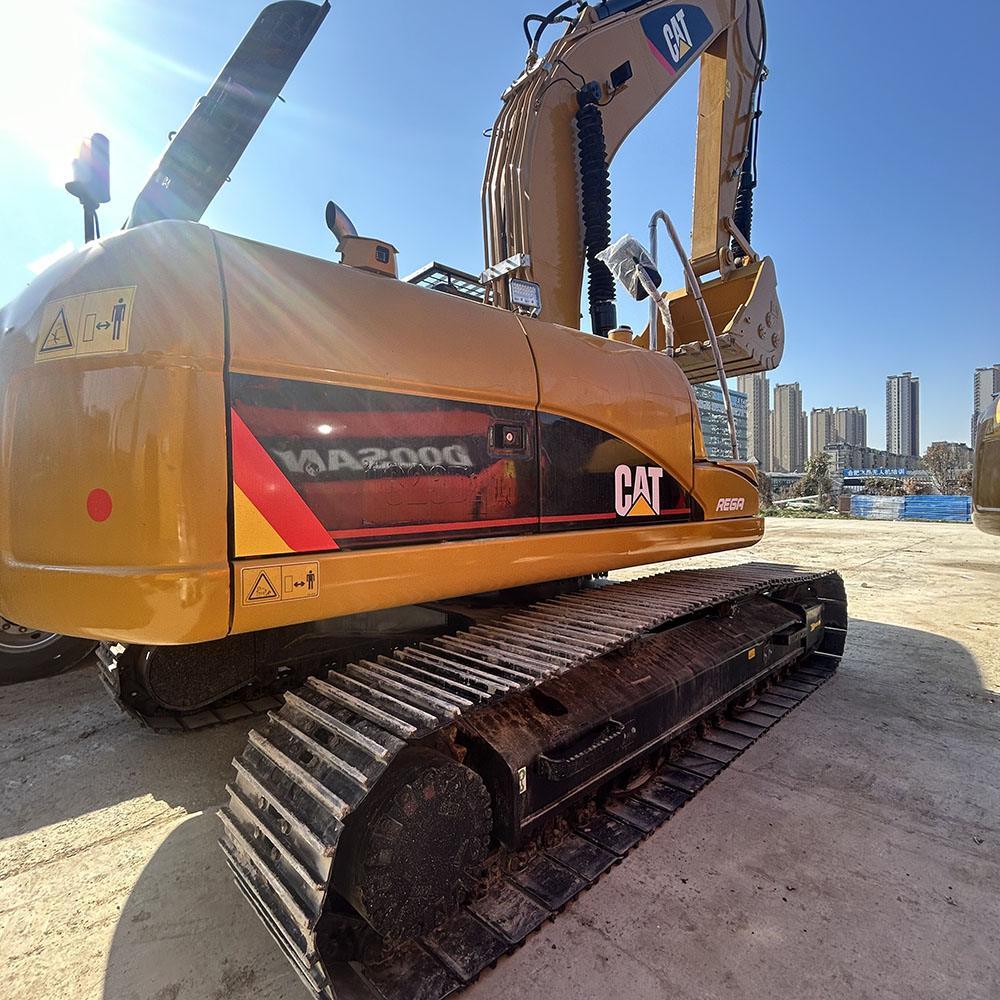
The 323D2L is fundamentally defined by its proven powerplant and robust dimensions. The heart of the machine is the Cat C7.1 ACERT™ diesel engine. A multi-cylinder, turbocharged unit, it features a displacement of 7.01 liters (428 in³). The engine delivers a reliable power output: the gross power is rated at 118 kW (158 hp), while the net power (SAE J1349/ISO 9249) is 110–116 kW (149–156 hp).
The “L” in 323D2L stands for Long Undercarriage, which provides a stable base for heavy digging, lifting, and working on uneven terrain. The operating weight ranges from approximately 22,300 kg to 23,300 kg (49,163–51,368 lb), with a common standard weight of 23.3 tons. The standard bucket capacity is 1.19–1.34 m³ (1.6–1.8 yd³). For transport, the overall length is approximately 9.95 meters (32.7 ft), width 2.98 meters (9.8 ft), and height 3.05 meters (10.0 ft).
| Parameter | Specification |
|---|---|
| Engine Model | Cat C7.1 ACERT™ |
| Engine Type | Diesel, 6-cylinder turbocharged |
| Displacement | 7.01 L (428 in³) |
| Bore × Stroke | 105 mm × 135 mm (4.13 in × 5.3 in) |
| Gross Power (ISO 14396) | 118 kW (158 hp) |
| Net Power (SAE J1349 / ISO 9249) | 110–116 kW (149–156 hp) |
| Emission Standard (Tier 3 models) | Equivalent to U.S. EPA Tier 3 / EU Stage IIIA |
| Emission Standard (Lower Tier models) | Equivalent to U.S. EPA Tier 2 / EU Stage II |
| Parameter | Specification |
|---|---|
| Operating Weight Range | 22,300–23,300 kg (49,163–51,368 lb) |
| Common Operating Weight | 23.3 t (51,368 lb) |
| Minimum Working Weight | 21,990 kg (48,480 lb) |
| Transport Length | ~9,950 mm (32.7 ft) |
| Transport Height | ~3,050 mm (10.0 ft) |
| Transport Width | ~2,980 mm (9.8 ft) |
| Tail Swing Radius | ~2,800–2,850 mm (9.2–9.4 ft) |
| Fuel Tank Capacity | 410 L (108.3 gal) |
| Total Hydraulic System Capacity | ~240 L (63.4 gal) |
| Hydraulic Tank Capacity | ~120 L (31.7 gal) |
| Engine Oil Capacity | 18 L (4.8 gal) |
| Cooling System Capacity | 25 L (6.6 gal) |
| Parameter | Specification |
|---|---|
| Boom Length | 5,700 mm (18.7 ft) |
| Stick Length | 2,900 mm (9.5 ft) |
| Max Digging Depth | 6,620–6,930 mm (21.7–22.7 ft) |
| Max Reach at Ground Level | 9,860–10,300 mm (32.3–33.8 ft) |
| Max Dumping Height | 6,810 mm (22.3 ft) |
| Max Digging Height | 9,140 mm (30.0 ft) |
| Parameter | Specification |
|---|---|
| Bucket Digging Force (ISO) | ~140–150 kN (≈15–16.8 t) |
| Stick Digging Force (ISO) | ~105–110 kN (≈11.8–12.4 t) |
| Swing Speed | 10.5–11.0 rpm |
| Travel Speed (High/Low) | 5.5 / 3.4 km/h (3.4 / 2.1 mph) |
| Max Drawbar Pull | ~206 kN (≈21 t) |
| Gradeability | 35° / 70% grade |
| Ground Pressure (with 600 mm shoes) | ~45–50 kPa |
| Parameter | Specification |
|---|---|
| Hydraulic Type | Load sensing, variable displacement piston pump |
| Main Pump Flow (total) | 428 L/min (113 gal/min) |
| Equipment Circuit Pressure | 35 MPa (5,076 psi) |
| Travel Circuit Pressure | 35 MPa (5,076 psi) |
| Swing Circuit Pressure | ~28 MPa (4,060 psi) |
| Pilot Circuit Pressure | 4.0 MPa (580 psi) |
| Primary Aux Circuit Flow | Up to 250 L/min (66 gal/min) |
| Secondary Aux Circuit Flow | Up to 40 L/min (10.6 gal/min) |
Understanding the 323D2L‘s place in Caterpillar‘s evolution is crucial. The “D2” represents the “Series 2” upgrade to the D-series, which introduced key refinements over the original 323D.
The Refined C7.1 Engine: At the heart of the 323D2L is the Cat C7.1 ACERT engine, widely regarded as one of Caterpillar‘s most reliable powerplants in this size class. It delivers a net power of 110–116 kW (149–156 hp). Importantly, the C7.1 was specifically engineered for emerging market fuel conditions, featuring a high-pressure common rail injection system designed to be robust and less sensitive to fuel quality variations, which is a critical consideration for used machines that may have operated in diverse environments. The C7.1 was offered in Tier 2 and Tier 3 emission configurations depending on the target market.
Electronically Controlled Fan: The 323D2 L is equipped with a temperature-sensing, electronically controlled hydraulic fan. The ECM precisely controls fan speed based on demand, minimizing fuel consumption while maintaining optimal cooling performance. According to manufacturer data, this design reduces fuel consumption by approximately 3%.
Long Undercarriage Stability: The “L” suffix is critically important. The long undercarriage significantly enhances stability, particularly when working on uneven ground or lifting heavy loads. This stability allows operators to work with greater confidence and efficiency, translating directly into increased productivity.
Superior Serviceability: This is one of the 323D2L’s strongest selling points for used buyers. Most daily maintenance points — including engine oil dipstick and fill, fuel filters, and hydraulic oil level checks — are accessible from ground level. The number of fuel filters was reduced compared to previous models, and filter change intervals were extended. This design philosophy reduces the complexity and labor time for routine service and minimizes downtime. Additionally, the machine is equipped with S·O·S sample ports for engine oil, hydraulic oil, and coolant, making routine fluid analysis quick and simple.
Durable Structure: The work equipment (boom and stick) features large box-section structures with thick multi-plate fabrications, stress-relieved via heat treatment. The use of baffle plates in high-stress areas increases strength without adding significant weight. The main frame is a robust, one-piece fabricated box construction with reinforced mountings for the cab, counterweight, and attachments.
The 323D2L was a significant leap forward in fuel efficiency for Caterpillar at the time of its introduction. Publicly quoted real-world fuel consumption for this class is approximately 15 liters per hour (4 gallons per hour), though this varies significantly by application, load, and operator habits.
The engine‘s robust design also gives it a significant advantage over competitors: it is specifically designed to be less sensitive to low-quality fuel, a common issue in many developing markets, thus protecting injectors and pumps and reducing downtime. The combination of these features makes the 323D2L particularly attractive for used buyers who will be paying for fuel themselves — lower consumption directly translates to higher profitability over the machine‘s remaining life.
Fuel Efficiency Features Table
| Feature | Benefit |
|---|---|
| Smart/Economy Mode | Saves up to 15% fuel consumption |
| ECM-Controlled Cooling Fan | Reduces fuel consumption by approx. 3% |
| Two Selectable Operating Modes | Balances power and fuel economy |
| Robust Fuel System Design | Less sensitive to low-quality fuel |
| Low Fuel Consumption (reference) | ~15 L/h |
The 323D2L is generally considered a robust and reliable machine. However, like any complex piece of equipment, it has documented issues that used buyers should be aware of.
1. Hydraulic Performance Issues (Slow Boom/Lack of Power). Slow boom operation, especially when combined with normal swing and travel speeds, is a documented concern. A 2017 owner report described a 2013 323D2L with 3,700 hours experiencing extremely slow boom raising under load, despite other functions operating normally. Potential causes for this issue include:
Main pump wear or pressure loss
Main relief valve malfunction
Pilot circuit issues
Boom cylinder piston seal failure
2. Engine-Related Failures. The C7.1 engine is generally reliable, but several issues can occur, particularly on high-hour units:
Fuel supply issues: Clogged fuel filters or failing fuel pump can cause hard starting or power loss
Electrical/ECM issues: ECM power supply faults or CAN bus communication failures can trigger ‘derate‘ (reduced power) mode
Poor fuel quality: The C7.1 is less sensitive than many competitors, but chronically bad fuel will still damage injectors over time
High-hour wear: Beyond 10,000–12,000 hours, injector wear, oil pump degradation, and bearing wear become considerations
3. Electrical and Electronic Failures. The 323D2L‘s control systems are robust, but documented issues include:
Dashboard displays going blank or showing erratic data
Sensors and switches failing due to vibration or corrosion
CAN bus communication faults
Potential starter motor, alternator, or battery issues on older units
4. Structural Wear on High-Hour Units. Over many thousands of hours, pin and bushing wear in the boom, stick, and bucket linkage can occur. Track frame cracking is rare but possible after 8,000–10,000 hours, especially with heavy side-loading use.
5. Hydraulic Hose & Seal Wear. As machines age, hoses harden, seals shrink, and fittings loosen. Common issues include boom cylinder seal leaks causing drift, final drive seal leaks, and external hose leaks due to abrasion or age.
Common Issues & Solutions Table
| Symptom | Common Cause | Diagnostic Method | Solution |
|---|---|---|---|
| Slow boom raising | Pump wear / relief valve | Pressure test main circuits | Pump rebuild or relief valve replacement |
| Hard starting / low power | Fuel supply / filters | Check filter condition & fuel pressure | Replace filters, diagnose fuel system |
| Dashboard blank / erratic data | CAN bus / ECM power | Check battery voltage, fuses, connections | Repair wiring or replace faulty component |
| Machine stuck in low power | ECM derate condition | Check diagnostic codes with Cat ET | Repair root cause (electrical/engine fault) |
| Hydraulic overheating | Contaminated oil / pump wear | S·O·S analysis, pressure/flow test | Change oil, flush system, repair pump |
| Boom drift (sinking) | Cylinder piston seal failure | Raise boom, shut off engine, measure drift | Replace piston seal |
| Track tension loss / excessive wear | Idler spring fatigue | Measure track sag | Adjust tension, replace spring if required |
| Irregular travel (pulling to one side) | Travel motor relief valve failure | Pressure test travel circuit | Replace or repair relief valve |
The 323D2L was designed with serviceability as a primary focus. The extended service intervals and ground-level access translate directly to lower long-term operating costs.
Maintenance Features:
Extended intervals: Major fluid and filter change intervals are longer than previous-generation machines
Ground-level access: Most daily and routine maintenance points accessible from ground
Filter consolidation: Reduced number of fuel filters simplifies maintenance and reduces parts cost
Remote diagnostic capability: Product Link telematics enables remote monitoring of machine health
While specific 5,000-hour cumulative costs vary by region and parts pricing, several sources indicate that operating costs for the Series 2 D-models are up to 15% lower than previous generations, primarily due to longer maintenance intervals and reduced parts consumption. Owners using genuine Cat filters and fluids, combined with S·O·S oil analysis, report significantly better component longevity than those using aftermarket alternatives. One owner of a high-hour 323DL reported using “nothing but original parts” over 13,000 hours, noting that while aftermarket cylinder seal kits cost only 300,theylastedlessthanayear,whereastheoriginal300,theylastedlessthanayear,whereastheoriginal2,000 kits with labor were ultimately the more cost-effective solution.
Recommended Maintenance Intervals Table
| Component | Service Interval (Reference) | Notes |
|---|---|---|
| Engine oil & filter | Every 500 hours | Use genuine Cat oil with S·O·S |
| Fuel filters (primary/secondary) | Every 500 hours | Use genuine Cat filters |
| Hydraulic return filter | Every 1,000–2,000 hours | Extended compared to older models |
| Hydraulic oil change | Every 3,000–5,000 hours (extendable with S·O·S) | Use Cat HYDO Advanced oil |
| Coolant | Every 12,000 hours / 6 years | Use Cat Extended Life Coolant |
| Swing drive oil | First 250 h, then every 1,000 h | |
| Final drive oil | First 250 h, then every 1,000 h |
Estimated Maintenance Costs (Reference) Table
| Cost Category | Estimated Amount (USD) |
|---|---|
| 5,000-hour cumulative maintenance (routine) | ~$8,000–15,000 |
| Hydraulic pump rebuild / replacement (if needed) | $2,500–5,000 |
| Engine top-end overhaul (10,000–12,000 hours) | $4,000–8,000 |
| Full undercarriage replacement (tracks, sprockets, rollers) | $5,000–9,000 |
| Stick cylinder repair (piston seals) | $1,500–3,000 |
| Annual S·O·S oil analysis | $30–50 per sample |
Note: These are estimated ranges. Actual costs vary significantly by region, parts pricing, operating conditions, and maintenance history.