

SALE

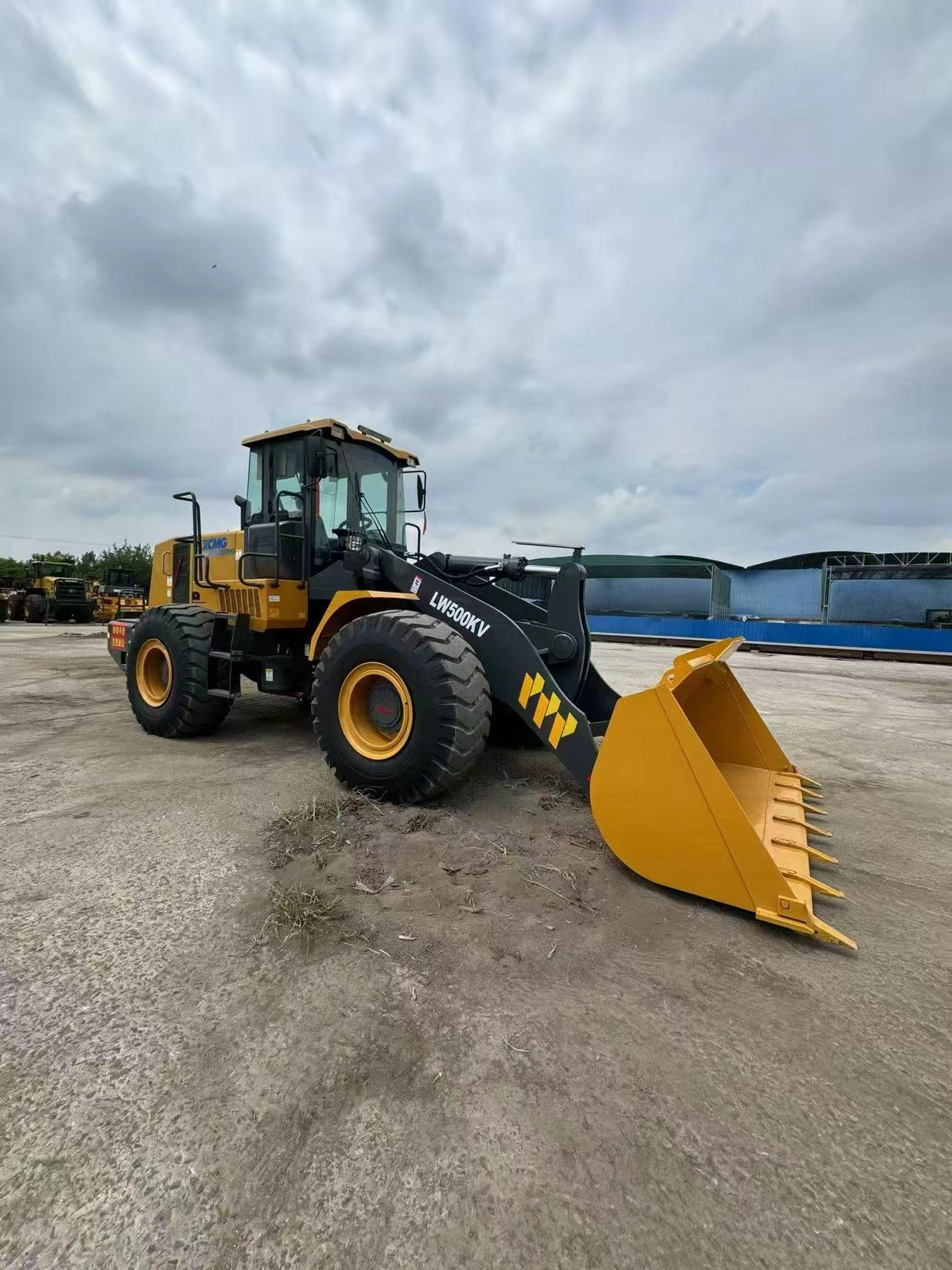
Showing The Single Result
Working hours are the single most important factor in evaluating a used XCMG LW500, as they directly determine remaining service life and future maintenance costs.
Industry reference ranges:
| Hour Range | Machine Condition | Purchase Advice |
|---|---|---|
| ≤ 2,000 h | Near‑new | Premium price, longest remaining life – best for long‑term ownership |
| 2,000 – 5,000 h | Performance prime | Best value zone – core components are in their stable period |
| 5,000 – 8,000 h | Medium‑use | Focus on transmission and hydraulics; set aside a repair budget |
| > 8,000 h | High‑mileage | Low purchase price, but expect higher maintenance frequency |
Key component life expectancy (based on industry big data):
Engine (Weichai WD10G220E23): Design life 12,000–16,000 h; overhaul interval ~8,000–10,000 h
Transmission: 8,000–12,000 h – warning signs: shift shock, metal particles in oil, clutch slipping
Hydraulic pump: 7,000–10,000 h – replace when flow drops below 80% of rated
Lift cylinders: 6,000–9,000 h – rebuild needed if boom droop or scored piston rods appear
Expert tip: Prioritise units with under 3,000 hours and complete service records. If the budget is tight, machines up to 5,000 hours are still reliable, but always get a professional inspection before purchase.
The LW500 series includes several variants – LW500F, LW500FN, LW500FV, and LW500KV. Below is a comparison of their core parameters:
| Parameter | LW500F | LW500FN | LW500FV |
|---|---|---|---|
| Rated load | 5,000 kg | 5,000 kg | 5,000 kg |
| Standard bucket | 3.0 m³ | 3.0 m³ | 3.0 m³ |
| Operating weight | 16.5 t | 16.5 t | 17.5 t |
| Engine model | Weichai WD10G220E23 | Weichai WD10G220E23 | Weichai WD10G220E23 |
| Rated power | 162 kW (220 HP) | 162 kW (220 HP) | 162 kW (220 HP) |
| Max. breakout force | 156 kN | 158 kN | 170 kN |
| Max. tractive force | — | 156 kN | 165 kN |
| Max. dump height | 3,100 mm | 3,100 mm | 3,090 mm |
| Total cycle time (raise + lower + tilt) | — | ≤ 9.9 s | ≤ 11 s |
| Max. travel speed | 38 km/h | 38 km/h | — |
| Min. turning radius (bucket edge) | 6.92 m | 6.92 m | 7.30 m |
Performance insights:
A total cycle time of 9.9 seconds is industry‑leading among 5‑tonne loaders, translating into higher hourly productivity.
The LW500FV’s 170 kN breakout force is outstanding for its class, giving superior penetration when digging into dense materials.
The Weichai WD10G220E23 is one of the most widely used engines in Chinese construction equipment – parts are globally available and repair costs are manageable.
Optional bucket sizes: standard 3.0 m³, with 2.5 m³ to 4.5 m³ options available.
Follow this 5‑step inspection protocol to verify performance before purchasing a used XCMG LW500:
Step 1 – Cold start test
The engine should start on the first attempt with no abnormal vibration.
Idle should be smooth, with no blue or white smoke (blue = oil burning, white = injector or head gasket issues).
Normal idle speed for the Weichai engine is approximately 650–750 rpm.
Step 2 – Hydraulic system test
Operate the boom and bucket – movements should be powerful and synchronised.
Load the bucket with material, raise it, then shut off the engine. Measure boom droop – a drop of more than 50 mm within 15 minutes indicates internal cylinder leakage.
Hydraulic pump flow should remain above 80% of rated capacity under normal conditions.
Step 3 – Transmission and driveline test
Shifts between forward and reverse should be smooth, without jerking.
Drive in all gears – there should be no clutch slipping. The LW500FN uses a transmission oil‑water cooling system that effectively resolves overheating issues common in this class.
Step 4 – Breakout and tractive force validation
Under standard conditions, the LW500FV delivers 170 kN breakout force (LW500FN: 158 kN).
Test: push the bucket into a stockpile and watch the engine rpm – a drop of more than 200 rpm indicates poor power matching or hydraulic issues.
Tractive force (165 kN on FV) should provide sufficient grip – the machine should not spin out easily.
Step 5 – Brake and steering test
The LW500 uses air‑assisted hydraulic four‑wheel caliper disc brakes – braking should be stable and responsive.
Steering should be light and precise. The LW500FN features load‑sensing steering for enhanced manoeuvrability.
Turning radius is about 6.92–7.30 m – test full‑lock turns on site to ensure smooth operation.
Based on field data, here are the top 5 most frequent issues with used XCMG LW500 units and their prevention strategies.
| Fault Type | Occurrence | Typical Symptoms | Prevention Measures |
|---|---|---|---|
| Transmission overheating | ★★★★☆ | High oil temperature, shift shock | Clean radiators regularly; check oil level and quality |
| Hydraulic pump wear | ★★★★☆ | Sluggish movement, weak power, abnormal noise | Change hydraulic oil and filter on schedule; avoid high oil temperatures |
| Steering weakness | ★★★☆☆ | Heavy steering, slow response | Inspect steering pump and priority valve; keep hydraulic oil clean |
| Cylinder internal leakage | ★★★☆☆ | Boom droop, bucket self‑tilting | Check seal condition; consider overhaul around 7,000 h |
| Radiator clogging | ★★★☆☆ | Persistently high water/oil temperature | Blow out radiator fins with compressed air every 500 h |
Transmission: Designed life 8,000–12,000 h. Change oil and filter every 1,000 h. Replace the torque converter hub if wear exceeds 0.5 mm.
Hydraulic system: Pump life 7,000–10,000 h. Check oil cleanliness every 500 h; change hydraulic oil every 2,000 h.
Cooling system: The LW500FN has an optimised cooling sequence for hydraulic oil and water. Clean the radiator every 500 h to prevent clogging.
Brakes: Air‑assisted hydraulic caliper discs – inspect pad thickness every 1,000 h and replace worn parts promptly.
Daily/weekly/monthly checks:
Daily: oil/water levels, tyre pressure, lights and signals.
Weekly: lubricate all pivot points, check hoses for leaks.
Monthly: torque all critical bolts, test brake performance.
| Model | Year | Hours | Indicative Price (USD) | Source |
|---|---|---|---|---|
| LW500FV | 2021 | not specified | ~$16,181 | Online platform |
| LW500FN | 2016 | 15,000 h | ~$5,065 | Online platform |
| LW500KV | 2025 | 500 h | near‑new, premium price | – |
Working hours (40% weight): Each additional 1,000 h lowers price by ~5–8%.
Year of manufacture (25%): Newer V‑series (FV/KV) command a premium over F/FN models.
Service records (20%): Machines with complete documentation sell for 10–15% more.
Configuration & attachments (15%): Air conditioning, quick‑couplers, different bucket sizes affect value.
Year 1–3 (0–3,000 h): Fastest depreciation – ~15–20% per year.
Year 3–5 (3,000–6,000 h): Depreciation stabilises – ~8–12% per year.
Year 5–8 (6,000–10,000 h): Slower – ~5–8% per year.
Beyond 8 years (>10,000 h): Price bottoms out, value depends mainly on maintenance condition rather than age.
Best value for money: 3–5 years old, 3,000–5,000 hours – the machine is still in its stable performance phase and has already passed the steep depreciation curve.
If budget allows: Choose under 2 years, under 2,000 hours – longer remaining life, lower long‑term cost of ownership.
If budget is tight: Consider 5–8 years, 5,000–8,000 hours, but set aside 15–20% of the purchase price as a first‑year repair reserve.
High‑hour units (e.g., a 15,000‑h LW500FN at ~$5,065) are cheap, but core components may already be past their design life – repair costs can exceed the purchase price.
Use valuation tools such as LECTURA Valuation to cross‑check fair market prices.
Always verify the authenticity of service records – odometer tampering is a real risk in the used equipment market.