

SALE

Showing The Single Result
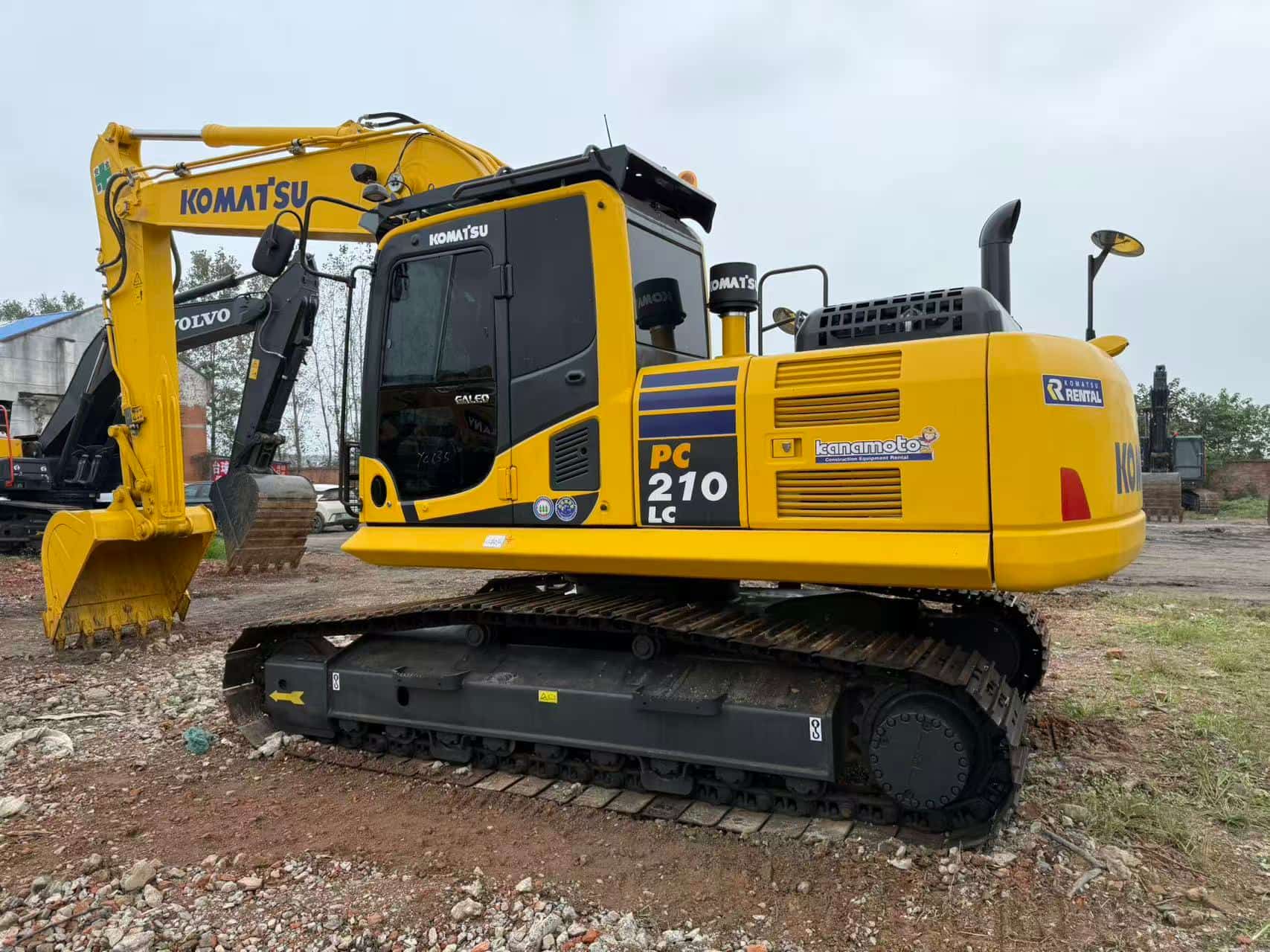
The “LC” stands for Long Crawler. Compared to the standard PC210, the PC210LC-7 features an extended undercarriage (approx. 4,450 mm track length) and a wider track gauge. This design significantly lowers the machine’s center of gravity and increases its footprint. For a used machine buyer, this means superior stability when using heavy attachments or lifting concrete pipes on soft terrain. It minimizes “tipping” risks, ensuring that even a 10-year-old unit maintains the structural integrity required for rigorous site work.
This excavator is powered by the legendary Komatsu SAA6D102E-2 engine, delivering 107 kW (143 hp). In practical field tests, a well-maintained PC210LC-7 operates at a highly efficient fuel rate of approximately 12 to 15 liters per hour under standard loading. Even in the used market, its Tier 2/Stage II compliant engine is prized for its “mechanical simplicity,” meaning it is less sensitive to varying fuel qualities in different regions (like Africa or Southeast Asia) compared to modern, highly electronic Tier 4 engines.
Komatsu’s patented HydrauMind (Hydraulic Mechanical Intelligence New Design) system is a closed-center load-sensing system with pressure compensation valves. It allows the machine to automatically direct power where it’s needed most. When you are buying a used PC210LC-7, you are getting a machine that can perform simultaneous movements (swinging, booming, and arm extension) without losing speed. This “intuitive” hydraulic response reduces operator fatigue and can increase daily trenching output by up to 10% compared to simpler open-center hydraulic systems found in budget brands.
The PC210LC-7 was built during an era where Komatsu prioritized “heavy-duty” steel casting. The boom and arm are reinforced with large cross-section structures, and the swing circle is designed for high-durability grease retention. For used buyers, this translates to lower maintenance overhead. Parts for the “-7” series are among the most widely stocked globally, often costing 20-30% less than parts for newer “-10” or “-11” models. This makes it a perfect ROI (Return on Investment) machine for contractors who need a 20-ton workhorse without the high price tag of new technology.
To ensure a high-quality purchase from an international supplier, pay close attention to:
Main Pump Pressure: Ensure the pump doesn’t “moan” under high load; pressure should consistently hit 37.3 MPa during relief.
Final Drive Wear: Check the travel motors for leaks and ensure the sprocket teeth haven’t worn down to a “pointy” shape, which indicates high mileage.
Monitor Codes: Turn the key to check the on-board dashboard for active “E-codes.” A clean dashboard usually signifies that the electronic controllers are in good health.
Pins & Bushings: Check for excessive “play” in the bucket and arm joints; a tight machine is a sign of regular lubrication and careful previous ownership.