

SALE

Showing The Single Result
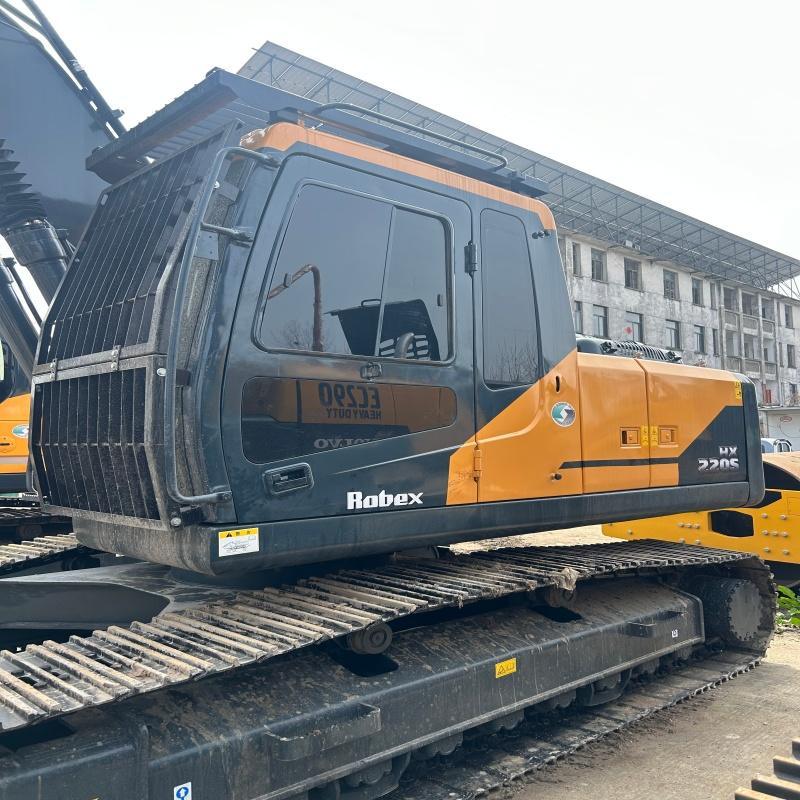
The Hyundai 220S is typically equipped with the Cummins B5.9-C engine, a legendary 6-cylinder turbocharged power unit known for its mechanical reliability and ease of maintenance. It delivers a net power of approximately 110 kW (147 hp) at 1,950 rpm. For the “S” series (often designed for specific regional markets), this engine is favored because it lacks complex electronic sensors found in Tier 4 models, making it highly resilient to varying diesel fuel qualities—a critical factor for contractors in Africa or Southeast Asia. Its high torque output at low speeds significantly reduces fuel consumption during heavy-duty loading cycles.
The 220S features a Tandem Axial Piston Pump system with a maximum flow rate of roughly 2 x 220 L/min. Hyundai’s proprietary CAPO (Computer Aided Power Optimization) system allows the operator to synchronize the engine and pump power to three distinct work modes (Power, Standard, and Economy). This ensures that when performing combined movements—such as simultaneously swinging and retracting the arm—the oil flow is balanced, preventing “hydraulic lag.” The bucket digging force reaches approximately 152 kN, allowing it to penetrate compacted clay or weathered rock with ease.
e “S” series is engineered with a reinforced X-chassis and a heavy-duty undercarriage. The track frames are designed with a pentagonal cross-section to prevent mud buildup and protect the rollers. In the used market, the 220S is praised for its strengthened boom and arm joints, which utilize high-internal-pressure steel castings at the pivot points. When inspecting a used unit, look for the original welding beads; the 220S is known for its “long-life” bushings that extend greasing intervals to 250 hours, significantly reducing operational downtime in dusty environments.
Beyond the standard hour meter check, buyers should prioritize:
The Main Control Valve (MCV): Check for any “seepage” or hydraulic drift. A healthy 220S should hold a full bucket at max reach for 10 minutes with less than 5cm of drop.
Swing Circle Play: Use the boom to lift the machine and check for excessive movement in the swing bearing.
Electronic Monitoring: Ensure the cluster gauge shows no active “Fault Codes” related to the fuel system or hydraulic pressures.
Undercarriage Wear: Measure the link height and sprocket wear; at 5,000 hours, a well-maintained 220S should still have 60% of its undercarriage life remaining.
One of the primary reasons for the 220S’s popularity in the global used market is component commonality. Because it uses the Kawasaki hydraulic pump and Cummins engine, spare parts are available in almost every country. Maintenance data shows that using 10W-30 premium engine oil and replacing the hydraulic return filter every 1,000 hours can extend the pump’s life to over 12,000 hours. Furthermore, the 220S’s centralized lubrication system means most daily check-points are accessible from ground level, encouraging better operator care and higher resale value.