

SALE

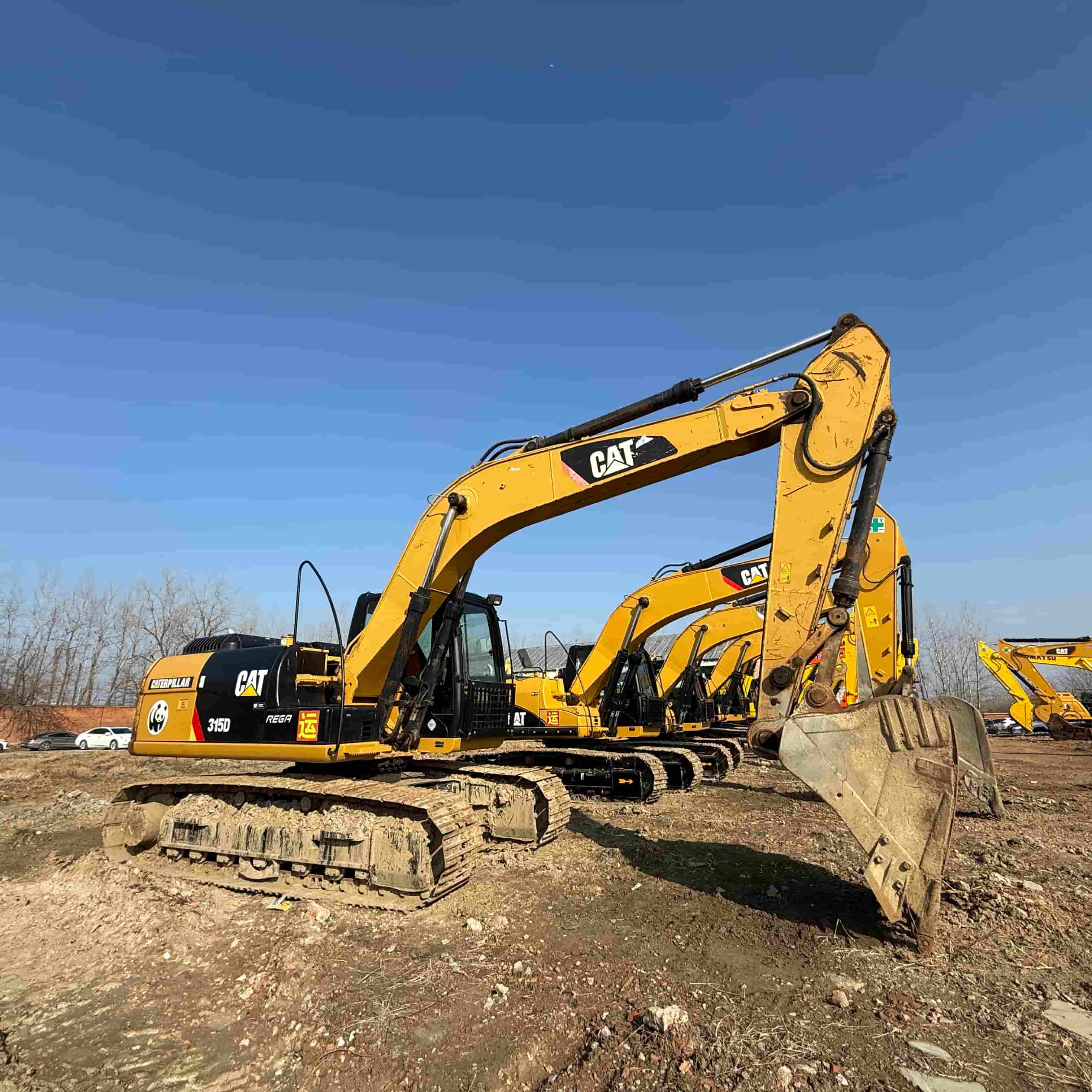
Showing The Single Result
| Parameter | Value |
|---|---|
| Engine model | Cat® C4.2 ACERT™ / C4.4 ACERT™ |
| Net power / Gross power | 86 kW (115 hp) / 91 kW (122 hp) |
| Operating weight | 15,400 – 17,280 kg |
| Standard bucket capacity | 0.54 – 0.61 m³ |
| Max digging depth | 5,720 – 6,490 mm (depending on configuration) |
| Max digging reach | 9,775 – 9,860 mm |
| Bucket digging force | 105 – 117 kN |
| Travel speed | 4.5 – 5.6 km/h |
| Fuel tank capacity | 218 – 300 L |
| Hydraulic flow (main pumps) | 2 × 150 L/min |
| Swing speed | 10.2 – 12 rpm |
Key technology highlights: The C4.2 ACERT engine uses advanced air and fuel systems, delivering 5% more power than previous models while reducing emissions through precise multiple fuel injection. Hydraulic system pressure is increased by 2%, providing greater lift capacity, swing torque, and digging force.
Fuel consumption of the CAT 315D varies significantly by application, operating mode, and machine condition. Based on user reports and industry data:
| Application Type | Fuel Consumption Range |
|---|---|
| Light duty / grading | 12 – 16 L/h |
| Medium duty / earthmoving | 16 – 22 L/h |
| Heavy duty / rock digging | 22 – 28 L/h |
| Extreme heavy duty | Up to 70 L/h (peak) |
Fuel-saving technologies:
Eco Mode (standard): Maintains full digging force and lift capacity while balancing performance and fuel economy
ADEM™ A4 engine controller: Flexibly matches fuel delivery, enabling quick response to varying job demands
Boom and stick regeneration circuits: Save energy during boom-down and stick-in operations, reducing operating costs
Fuel efficiency tips: Keep air filters clean (a clogged filter can increase fuel consumption by 5–10 L/h), replace fuel filters regularly, and use Eco mode whenever possible.
Based on real maintenance cases, common hydraulic problems and solutions for the CAT 315D:
| Symptom | Common Cause | Diagnostic Method | Solution |
|---|---|---|---|
| Slow / weak operation | Main pump wear or low pilot pressure | Pressure test: pilot pressure should be 45 bar, main pressure 340 bar | Repair or replace pump barrel, valve plate, pistons |
| Boom / stick abnormal movement | Secondary relief valve pressure deviation | Check pressure consistency between boom, stick, and bucket | Adjust secondary relief valve to 340 bar |
| Single-track travel weak | Travel motor secondary relief valve failure | Pressure test, compare left and right sides | Replace faulty relief valve |
| Boom natural drift | Boom cylinder piston seal damaged | Lift full load, shut off engine, observe drift rate | Replace piston seal |
| Rapid oil temperature rise | Contaminated hydraulic oil / clogged filter | Inspect tank for debris, check return filter bypass valve | Replace hydraulic oil and filters |
Real repair case: A 315D exhibited poor lifting capacity and slow operation. Testing showed main pressure only 18 MPa (standard 34 MPa). Diagnosis revealed severe wear of the dual pump and damaged boom cylinder seals. After replacing parts and flushing the system, performance was restored.
Important note: Over 70% of hydraulic system failures are related to hydraulic oil contamination. Always maintain clean oil and replace filters on schedule.
Maintenance costs after 5,000 hours vary by region, parts pricing, and operating conditions. The table below provides an industry reference framework:
| Maintenance Item | Estimated Cost Range (USD) | Notes |
|---|---|---|
| Engine oil + filter changes (10× at 500h) | $2,000 – $3,000 | Approx. $200–300 per change |
| Hydraulic oil + filter change | $1,500 – $2,500 | Recommended every 3,000–5,000 hours |
| Fuel filter replacements | $200 – $400 | Accumulated over multiple changes |
| Cooling system service | $200 – $400 | Coolant replacement + system flush |
| Track shoes / sprockets / rollers | $3,000 – $6,000 | Depends on wear |
| Bucket teeth replacement | $800 – $2,000 | Based on usage frequency |
| Seals / bearings / wear parts | $500 – $1,500 | As inspection dictates |
| Engine / hydraulic system tuning | $500 – $1,000 | Professional technician service |
| Estimated 5,000-hour cumulative cost | $8,700 – $16,800 | Excludes unexpected major repairs |
Tips to reduce maintenance costs:
Follow manufacturer’s recommended service intervals strictly
Keep detailed maintenance logs (date, work done, cost)
Provide operator training to reduce damage from improper operation
Choose reliable suppliers for genuine or high-quality aftermarket parts
The CAT 315D is a 15–17 ton class medium excavator. Below is a direct comparison with its main competitors:
| Specification | CAT 315D | Komatsu PC130-8M0 | Hitachi ZX130-5A |
|---|---|---|---|
| Operating weight | 15.4 – 17.3 t | 12.5 – 13.5 t | 12.6 – 13.1 t |
| Engine power | 86 – 91 kW | 69.2 kW | 69.6 kW |
| Bucket capacity | 0.54 – 0.61 m³ | 0.5 – 0.6 m³ | 0.52 m³ |
| Max digging depth | 5.72 – 6.49 m | 5.52 m | 5.45 m |
| Bucket digging force | 105 – 117 kN | 93.1 kN | 97 kN |
| Fuel tank capacity | 218 – 300 L | 200 – 240 L | 210 L |
Key advantages of the CAT 315D:
Most powerful engine – 91 kW, over 30% higher than the 69–70 kW of competitors
Highest digging force – 117 kN, about 25% higher than the Komatsu PC130
Structural durability – X-shaped box-section frame, robotic welding (3x stronger penetration than manual welding)
Operator comfort – Cab pressurized to 50 Pa for dust resistance, color LCD monitor with 27 languages
Multi-function capability – Supports hammers, thumbs, grapples, shears, pulverizers, and more
Best applications: The CAT 315D is ideal for medium to large earthmoving, municipal construction, and quarry stripping where power and digging force are critical. Its stronger engine and hydraulic system give it a clear edge in heavy-duty conditions.