

SALE

Showing All 2 Results
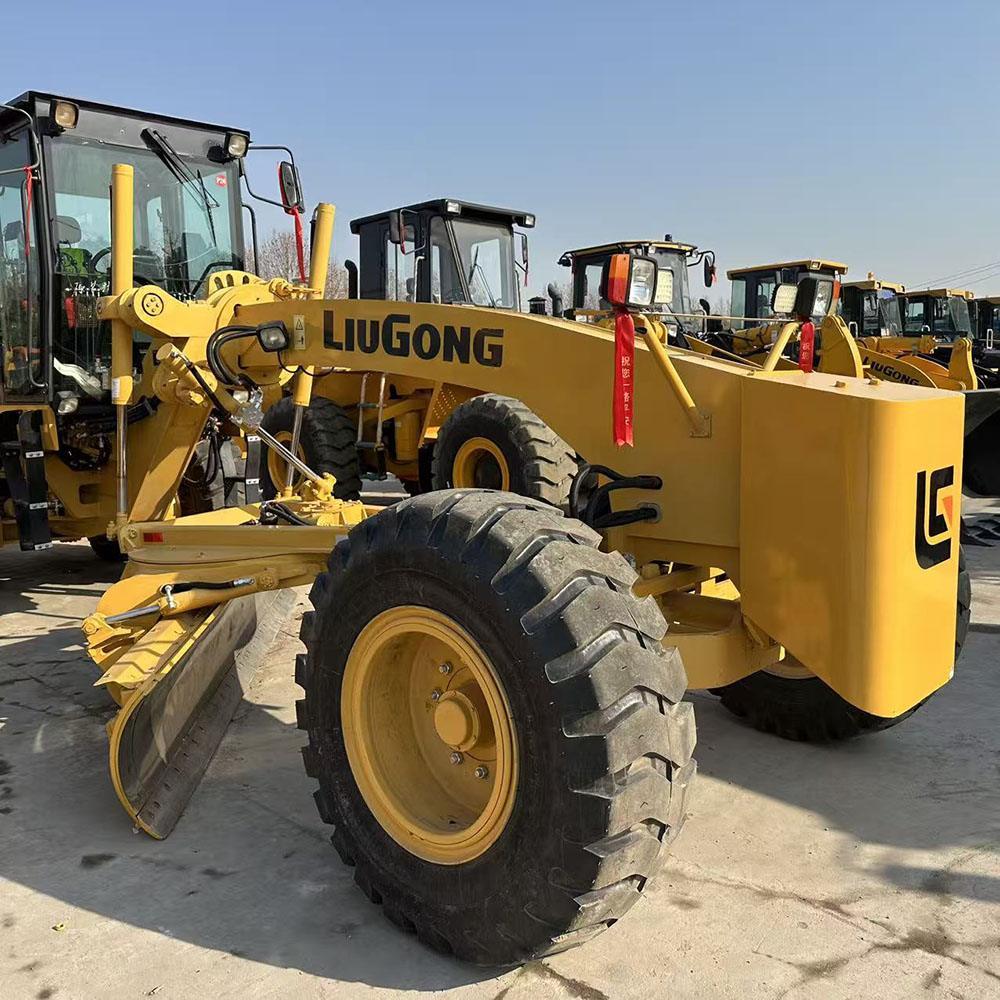
The CLG4200 is built around a robust drivetrain that combines a powerful engine with a world-class transmission. At its heart is the Shangchai SC8DK200G3 diesel engine, a 4-cylinder, 8.8-liter unit that meets China Stage III emission standards (equivalent to U.S. EPA Tier 3 / EU Stage IIIA). The engine delivers 147 kW (197 hp) at 2,200–2,300 rpm with a maximum torque output of 1,363 N·m.
The machine is equipped with a ZF 6WG200 transmission, a six-speed powershift unit with electronic shift control that is widely recognized as one of the most reliable transmissions in the grader segment. ZF components are known for smooth shifting, high efficiency, quiet operation, and longevity, with an average service life of 10,000 hours before major overhaul.
The entire machine weighs in at 16,000 kg (35,274 lb), providing excellent stability during grading operations. It features a 4,270 mm (14-foot) blade with a height of 645 mm, capable of achieving a maximum cutting depth of 550 mm and a blade lift height of 590 mm. The blade can be tilted up to 90° in either direction and rotated 360°, with a cutting angle adjustable between 28° and 74°.
The machine’s dimensions are 9,165 mm in length, 2,600 mm in width, and 3,500 mm in height, with a minimum turning radius of 7,300 mm. The maximum drawbar pull is rated at 88 kN (19,783 lbf), providing ample traction for heavy grading and ripping tasks.
1. Proven ZF 6WG200 Transmission. The inclusion of the ZF 6WG200 transmission is arguably the CLG4200’s most significant asset. Widely regarded as one of the best transmissions in the grader industry, it has earned a reputation for exceptional reliability and low lifecycle costs compared to other designs. According to official literature, the ZF transmission has an average service life of 10,000 hours without requiring major repair. Multiple user reviews confirm this, with one noting the import transmission as a key advantage, and another praising the smooth shifting and low noise levels. The six-speed direct drive transmission provides the right gear ratios for everything from rough grading to fine finishing.
2. Robust, Dual-Power Engine. The Shangchai SC8DK200G3 engine, incorporating electronic high-pressure common rail, turbocharging, and intercooling, delivers strong performance with dual power curves. This dual-power design reduces fuel consumption by automatically adjusting the engine’s power output based on the specific demands of the job. LiuGong claims an average time between major overhauls of 15,000 hours for this engine. The engine meets China Stage III emission standards, providing a reasonable balance of power and environmental compliance. The machine also features an efficient suction-type cooling system with a curved intake passage, which remains effective even in dusty environments where conventional cooling systems often struggle with clogged cores.
3. Heavy-Duty Undercarriage and Working Equipment. The CLG4200 is equipped with a heavy-duty drive axle featuring imported bearings and heavy-duty silent chains with 1.4 times greater tensile strength than standard chains—critical for long-term durability in demanding applications. The machine features a rolling ring disc (turning circle) with a fully sealed design, which locks out sand, dust, and dirt. This sealed design significantly reduces wear at the turning circle interface, lowering maintenance requirements and extending service life. A reinforced worm gear box further enhances precision, rigidity, and durability.
4. Operator Comfort and Visibility. The CLG4200’s cab is pressed and sealed for dust resistance and noise reduction, with a top-mounted A/C and heater system and UV-protected glass. The cab is mounted on the front frame, keeping the operator positioned directly over the blade for superior visibility of cutting operations—essential for fine grading accuracy. The interior uses sound-absorbing materials, and the steering wheel and seat are adjustable for operator comfort.
5. Strong Dealer Network and Parts Availability. LiuGong has invested heavily in its global service infrastructure. The company operates 20 manufacturing bases, 5 R&D centers, 13 regional parts centers, and a network of over 300 dealers across more than 100 countries. Multiple user reviews highlight that parts for this machine are “particularly easy to buy” and “widely available on the market.” However, the quality of support does vary significantly by region, with most positive feedback coming from users in major markets like South Africa, Southeast Asia, and parts of Australia.
The aggregate of 29 user reviews on Chinese platforms provides a comprehensive picture of the CLG4200’s real-world performance. The overall rating is 76/100, with category scores ranging from 73 (price) to 79 (performance).
What Owners Praise:
Strong value for money. Owners consistently note the high cost-performance ratio, with one user commenting that “it’s a niche brand, but the price is very competitive,” and another noting it’s “quite good for a domestic brand.”
Simple and robust design. The cab and controls are “truly operator-friendly” and “feel good to use.” One owner noted the classic cab design as a standout feature.
High productivity. One user praised the efficiency, stating, “It has good production capacity. It has many users on the job site.” Another commented, “The efficiency is unmatched; much better than what I used before.”
Responsive after-sales service. Many owners report getting timely service when problems arise, with one user specifically praising the “very responsive” service team.
Common Criticisms and Complaints:
Heavy water consumption. This is the most frequently cited issue, with multiple users reporting that the machine uses excessive coolant. For used buyers, this should be flagged for specialist inspection during a test run.
Poor turning performance at low speeds. Several users note that the machine “doesn’t turn smoothly” or that there is an issue with turning at low speeds, possibly related to the ZF transmission’s calibration or axle/steering geometry.
Blade shape and design. Complaints that the cutting edge is “unreasonably shaped” make it difficult to achieve a completely flat, smooth finish, potentially affecting final grading precision.
Vulnerable small components. Some users report that small parts break easily, and that while the machine is productive, these small failures create downtime and constant repair needs.
Difficulty sourcing certain parts. While official channels are robust, owners in less-served regions sometimes report that certain parts are “not easy to repair” or difficult to source outside the official dealer network when warranty expires.
Based on extensive user feedback and technical analysis, the following recurring issues have been documented:
1. Excessive Coolant Consumption. Multiple owners report that the CLG4200 consumes an abnormally high amount of coolant. The problem could be a minor leak in a hose, a faulty radiator cap, or a more significant internal issue like a compromised head gasket. For used buyers, monitoring the coolant level closely during a test run and checking for any residue around the engine is essential.
2. Turning Limitations at Low Speed. The steering on the CLG4200 is reported to be “not agile” and less responsive at low speeds, making maneuvering in confined spaces, such as construction sites and narrow roads, difficult. This issue may be related to the calibration of the articulation and front wheel lean systems or the specific design of the steering axle.
3. Blade Design Issues. Users have noted that the blade’s curvature is sometimes “unreasonable,” resulting in less-than-optimal dirt-rolling and material movement, which can affect final grading quality.
4. ZF Transmission Electronic Controller Issues. Although the ZF gearbox itself is robust, its electronic controller and shift actuators have been known to develop faults. Signs to watch for include erratic shifting, failure to shift under load, or error codes. This is a costly part to replace, so diagnostic checks are recommended during the inspection.
5. Vulnerable Hydraulic Components. Some owners have reported issues with hydraulic fittings and small hoses, noting that they can fail prematurely. This is often attributed to either material fatigue in high-vibration areas or wear from environmental factors like heat and dust.
6. Hydraulic Pump Performance Degradation. Over time, the main hydraulic pumps may lose efficiency, causing slower blade response, reduced lifting capacity, or intermittent performance issues. Contaminated hydraulic fluid is a common contributor to pump wear.
7. Electrical and Sensor Failures. Like all modern equipment, the CLG4200 relies on various sensors and a CAN bus system to function. Intermittent electrical faults, sensor failures, and wiring harness issues can be frustrating and time-consuming to diagnose. Performing a diagnostic scan with appropriate software before purchase is highly recommended.
Key Takeaway for Used Buyers: Most of these issues—coolant loss, hydraulic weaknesses, turning restrictions, and electrical faults—are detectable with proper pre-purchase inspection. A diagnostic scan, cold-start observation, and thorough function testing are the most effective ways to avoid a problematic machine.
The CLG4200’s maintenance requirements are well-defined and manageable if the machine has been properly cared for.
Recommended Maintenance Intervals:
| Component | Service Interval | Notes |
|---|---|---|
| Engine oil and filter | Every 500 hours | Use manufacturer-recommended grade |
| Fuel filters | Every 500 hours | Genuine filters recommended |
| Hydraulic return filter | Every 1,000 hours | Extendable with oil analysis |
| Hydraulic oil change | Every 2,000 hours | Using factory-spec oil |
| Transmission oil and filter | Every 1,000 hours | ZF-specific fluid required |
| Final drive oil | Every 1,000 hours | Inspect for contamination |
| Coolant change | Every 2,000 hours | Check concentration and condition |
| Wheel bearing service | Every 2,000 hours | Repack with fresh grease |
Estimated 5,000-Hour Maintenance Costs (Reference – USD):
| Maintenance Category | Estimated Cost (USD) |
|---|---|
| Engine oil + filter changes (10 × 500h) | $1,500–2,500 |
| Fuel filters (10 × 500h) | $300–500 |
| Hydraulic oil + filter change (2-3 changes) | $1,000–2,000 |
| Transmission service (5 × 1,000h) | $1,000–2,000 |
| Tire replacement (as needed) | $2,000–4,000 |
| Blade cutting edge replacement | $500–1,500 |
| Labor (accumulated over 5,000h) | $3,000–6,000 |
| Estimated 5,000-hour total (routine) | 9,300–9,300–18,500 |
Note: These are estimated ranges. actual costs vary significantly by region, parts pricing, operating conditions, and maintenance quality.
Long-Term Maintenance Considerations:
ZF Transmission Overhaul: The ZF transmission has an expected life of 10,000 hours before overhaul. A rebuild typically costs $4,000–8,000 depending on market.
Engine Overhaul/Cylinder Kit Replacement: The engine’s cylinder kits may need replacement at 10,000–15,000 hours, costing $3,000–6,000.
Hydraulic Pump Rebuild: Pump wear typically occurs at 8,000–10,000 hours, costing $2,000–4,000.
Preventive maintenance tips:
Use only genuine filters or OEM-equivalent parts. Aftermarket filters can compromise engine protection.
Follow the manufacturer’s coolant change schedule strictly to prevent cylinder liner cavitation—a known risk on wet-sleeve diesels.
Use ZF-specified transmission fluid; generic fluid will damage the transmission over time.
Pay attention to grease fittings; the CLG4200 has many pins and bushings that require regular greasing to prevent premature wear.