

SALE




Showing All 6 Results
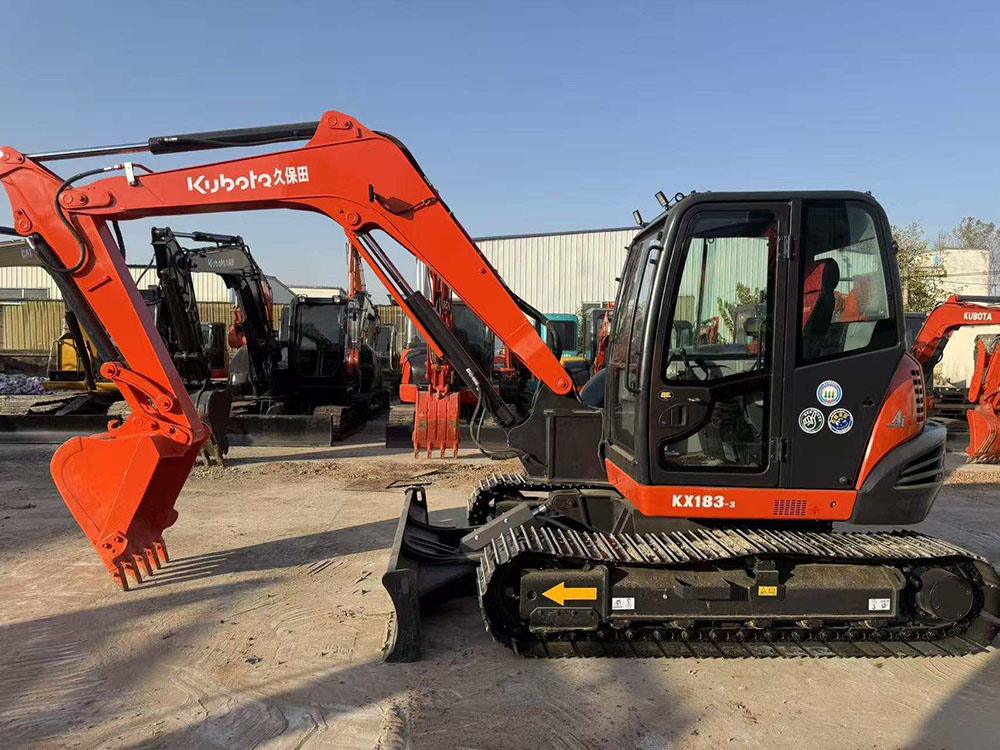
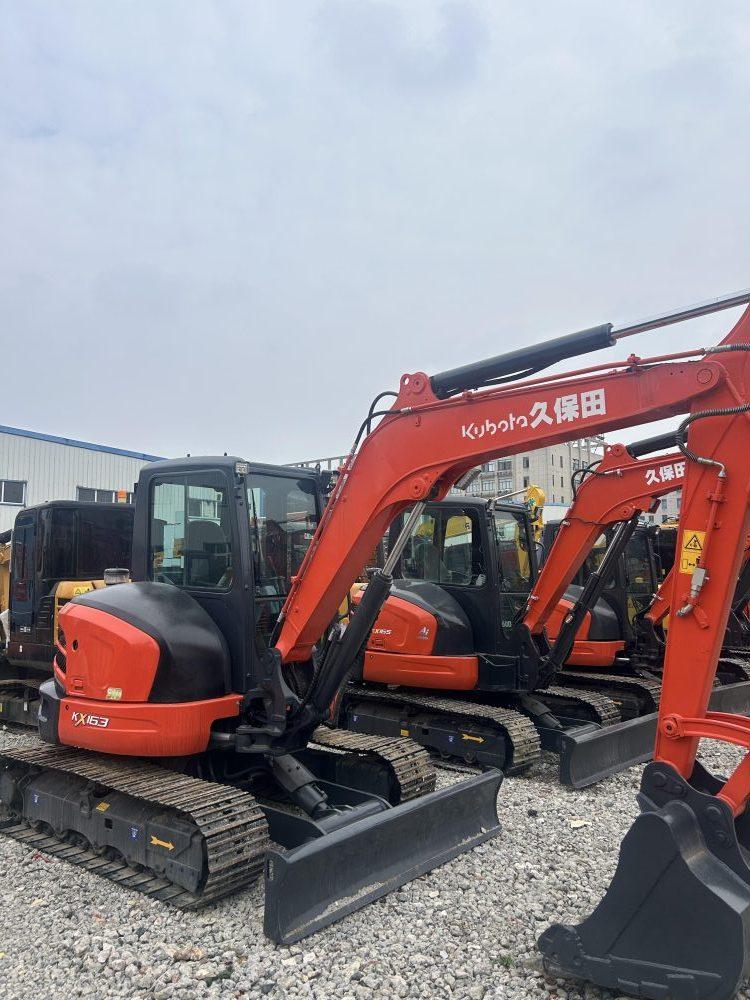
The KX183-3 is an 8‑ton class crawler excavator with an operating weight of 8,350 kg (18,409 lb). It sits above the smaller KX/KX-3 series (KX060, KX080) and below larger 10‑ton models, positioning it as a compact heavy lifter: small enough to work in confined spaces yet heavy enough to handle serious digging and demolition. Its primary rivals include the Yanmar VIO80, Caterpillar 308E, and John Deere 80G. The KX183-3‘s signature advantage is its compact design paired with a 0.31 m³ standard bucket. The 450 mm track shoe width and 64.5 cm track gauge provide excellent flotation without sacrificing maneuverability in tight urban environments.
The ‘Dash 3’ designation refers to the third major iteration of the KX183 chassis, which is now being superseded by the KX183-5 series. Consequently, the majority of used units on the market today are from the 2015–2022 production period, with earlier machines (X‑series) and later -5 models representing the bookends of availability.
The KX183-3 is built around the Kubota V3307DI-T diesel engine [0†L7][4†L6]. This 3.33-liter, 4-cylinder, water-cooled powerplant incorporates direct injection, turbocharging, and electronic fuel control. The engine’s energy management system automatically idles after 4 seconds of inactivity and features two-stage deceleration for reduced fuel consumption during lighter work.
| Parameter | Value |
|---|---|
| Operating Weight | 8,350 kg (18,409 lb) |
| Standard Bucket Capacity | 0.31 m³ (0.41 yd³) |
| Engine Model | Kubota V3307DI-T |
| Rated Power | 47.8 kW (65 hp) @ 2,000 rpm |
| Displacement | 3.33 L (203 in³) |
| Fuel Tank Capacity | 115 L (30.4 gal) |
| Max Digging Depth | 4,290 mm (14.1 ft) |
| Max Reach at Ground Level | 7,010 mm (23.0 ft) |
| Max Dumping Height | 4,980 mm (16.3 ft) |
| Travel Speed (High/Low) | 4.9 / 2.7 km/h (3.0 / 1.7 mph) |
| Swing Speed | 9.5 rpm |
| Bucket Digging Force | 65.2 kN (14,660 lbf) |
| Overall Length (Transport) | 6,450 mm (21.2 ft) |
| Overall Width (Transport) | 2,200 mm (7.2 ft) |
| Tail Swing Radius | 1,460 mm (4.8 ft) |
| Track Shoe Width | 450 mm (17.7 in) |
| Dozer Blade Width × Height | 2,200 mm × 500 mm |
The engine incorporates an advanced combustion system that reduces emissions and meets Tier 3 / Stage IIIA requirements without requiring a diesel particulate filter (DPF) or selective catalytic reduction (SCR), keeping parts simpler. Key design features of the KX183-3 include: variable displacement piston pumps (2× plus a gear pump) for the main hydraulic system; two travel speeds for efficient site movement; a standard dozer blade for backfilling and stabilization; and an ultra‑compact tail swing that allows safe operation in narrow environments.
The KX183-3 has accumulated a substantial body of owner testimonials across global construction forums. The feedback is nuanced: most owners acknowledge its stable power delivery, but a significant number express frustration with its operational refinement and maintenance costs.
Positives: High Productivity and Reliability. Aggregated user feedback repeatedly highlights the KX183-3‘s strong, reliable power and Kubota engine performance, even in demanding applications. One user summarized: “Kubota KX183-3 hasn‘t given any trouble yet. All hydraulics are still tight, no leaks. The undercarriage is still tight”. Another owner praised the machine’s suitability for urban environments: “Ultra‑compact design and turning radius of just 1.38 m allows it to maneuver effectively in confined spaces”. The machine‘s powerful hydraulic system consistently delivers smooth and precise control, making it a favorite for trenching and excavation projects where accuracy matters.
Owners consistently endorse the KX183-3’s suitability for demanding environments. One long‑term operator noted: “After nearly 9,000 hours, the paint is still original, and performance remains robust”. Multiple users echoed the machine’s durability, with one comment summarizing: “The KX183-3 has strong engine power, flexible control, stable performance, and rich functions, capable of meeting the needs of various excavation operations”.
Negatives: Sluggish Operation and High Fuel Consumption. The most common complaint about the KX183-3 is its operational speed. Multiple owners describe the machine as “slow,” particularly the stick (arm) during fine grading tasks. A typical comment: “Feel its action is not fast, especially the arm during finishing operations”. Another user bluntly stated: “Slow, high fuel consumption”. One owner reported that the machine’s movements are “slow and uncoordinated, the excavator bucket is poorly designed” [2†L32-L33].
These complaints point to the V3307DI-T‘s torque curve: it produces peak power at 2,000 rpm, which is relatively low for a small diesel, favoring fuel economy over lightning‑fast cycle times typical of some European competitors. Users who previously operated machines like the Yanmar VIO80 or CAT 308E note a significant difference in control feel, particularly for finish grading.
Expert Interpretation: Reports of “sluggish hydraulics” after hours of operation often point to the V3307DI-T’s fuel efficiency tuning rather than a mechanical defect. The ECU is programmed to sacrifice instantaneous response for fuel savings, meaning operators accustomed to European machines may need to adjust their technique.
Fuel Efficiency. Another persistent criticism is the machine‘s relatively high fuel consumption. One owner reported that fuel consumption reached “close to 10 units” (interpreted as approximately 10 L/h). While not extreme for an 8‑ton class excavator, this is higher than some owners expected. An owner’s report of “fuel consumption is relatively high, with oil consumption approaching 10 units” illustrates that the KX183-3 is not the most fuel‑efficient machine in its class; prospective buyers should set realistic expectations accordingly.
Noise and Vibration. While the Japanese‑built engine is generally smooth, some owners report increased engine noise after several hundred hours of operation. This is not a defect per se, but it indicates that the engine‘s sound insulation and mounting system are less refined than some premium competitors.
Overall Verdict. The KX183-3 is a durable, productive machine that shines in urban construction, landscaping, agriculture, and utility installation. It is particularly well‑suited for trenching, site clearing, backfilling, and loading duties where productivity is critical. The 0.31 m³ standard bucket strikes a good balance between capacity and cycle time, though the optional bucket range extends up to 0.35 m³ for lighter materials. However, operators seeking the fastest cycle times or the ultimate in fuel economy may be disappointed, and buyers who cannot invest in diligent maintenance may find that the machine‘s long‑term reliability suffers.
The KX183-3 is generally a dependable machine, but several recurring issues have been documented that prospective used buyers should be aware of.
1. Boom Cylinder Sinking (Most Common Complaint). A well-known failure on the KX183-3 is the “boom cylinder sinking” to 5600 hours of use, where the main boom gradually drops under load even when the control lever is in neutral. Extensive forum documentation identifies the root causes: failure to use manufacturer‑specified (genuine Kubota) filters and maintenance parts, and contamination of the hydraulic oil with debris. The repair involves removing and cleaning the boom holding valve, flushing the hydraulic system, and replacing any non‑genuine or contaminated components.
The root cause is almost always inadequate filtration maintenance. When an owner neglects to replace hydraulic filters every 1,000 hours, fine metal particles accumulate in the oil and eventually lodge in the boom‘s holding valve, causing it to leak internally. A common warning sign is that the boom sinks more from a raised position without the machine making any external oil leak visible.
For Used Buyers: If a test indicates that the boom drops more than about 50 mm in 5 minutes with the engine off, the holding valve (or the cylinder piston seals) is failing. This is a significant negotiating point because professional repair can cost a meaningful amount, depending on your local market.
2. Hydraulic System Leaks. Hydraulic oil leaks are another frequently reported issue on the KX183-3. Over time, O‑rings and seals harden, leading to external leakage around the main control valve, cylinders, or swing drive motor. Contributing factors include extended use resulting in seal aging, insufficient maintenance causing contamination, and improper manufacturing tolerances in some early production units.
Early detection is critical: a small drip from the main control valve may not affect performance immediately, but if left unaddressed, it can lead to a catastrophic failure when the system loses pressure. Red flags for used buyers include visible oil stains around the valve block, cylinders with wet rods, and low hydraulic oil levels on the sight glass.
3. Throttle Sensor and Electrical Glitches. The throttle position sensor and engine speed dial are known intermittent failure points. Symptoms include inconsistent engine response when moving the throttle dial, failure to reach high idle, or a “check engine” warning light without any apparent mechanical fault.
Diagnosis requires plugging into the diagnostic port (which uses a J1939 CAN interface) to read fault codes. Replacement of a faulty throttle sensor is relatively straightforward, but intermittent wiring issues can be time‑consuming to trace.
4. Track Component Wear. The undercarriage (chains, sprockets, track shoes, carrier rollers) on any high‑hour machine is a major wear item. For the KX183-3, the standard 450 mm triple‑grouser shoes are durable but can wear rapidly in abrasive applications like rock handling or demolition debris. Signs of excessive wear include visible ‘hooking‘ on the sprocket teeth, track adjuster bottoming out, and missing or cracked rubber pads on track shoes.
5. Reduced Travel Performance (Hydrostatic Wear). Some owners report that after many hours, the machine loses travel power, particularly when turning on a slope. This condition is caused by wear in the hydrostatic drive motors or charge pump inefficiency, leading to internal leakage. The machine may feel sluggish in high range or struggle to climb a grade that it once handled easily.
6. Dozer Blade Cylinder Leaks. The front dozer blade is a standard feature on most KX183-3 units. The blade‘s lift and tilt cylinders are direct‑mount type without rod boots, meaning the piston rods are exposed to dirt and debris, increasing the risk of scoring and seal failure.
7. Non‑Genuine Parts Consequences. Several field examples demonstrate that using aftermarket filters causes premature wear. The V3307DI-T‘s precision fuel system requires that only genuine Kubota fuel, oil, and hydraulic filters be used; aftermarket filters often bypass internal contamination.
8. Final Drive Wear. The swing‑drive motor and final drive assemblies are robust but can develop leaks or reduced efficiency over time. Repairing a worn final drive typically requires specialized tooling; a replacement unit costs somewhere in the range of $1,500–3,000 USD depending on the market.
Key Takeaway for Used Buyers: Most of these failure points—hydraulic leaks, boom drift, reduced travel performance—are detectable with a proper pre‑purchase inspection. A well‑maintained KX183-3 with adequate service records and clean oil analysis is far less likely to present major surprises than a cheaper unit with an unknown history.
The KX183-3 is designed for periodic maintenance, but owner feedback reveals significant variance in real‑world running costs depending on care and usage.
Owner‑Reported Maintenance Expenses. One KX183-3 owner detailed their experiences:
The 1,000‑hour major service cost approximately 6,000 CNY (equivalent to approximately $830 USD)
Smaller 500‑hour services cost over 1,000 CNY each (approx. $140 USD)
8 sets of bucket teeth were replaced over the service period, costing 240 CNY per set (approx. $33 USD each)
These figures, while from a specific period and region, illustrate that genuine Kubota parts and professional labor can accumulate. However, routine servicing is significantly less than major repairs, and owners who follow the manufacturer‘s schedule avoid many of the costly failures noted above.
Consumable Wear Rates. Another owner who worked extensively in rock applications replaced 8 sets of bucket teeth by 1,500 hours. Rock work accelerates wear on the bucket edges, teeth, and undercarriage components substantially.
Recommended Maintenance Schedule Approach. Owners should budget for the following approximate intervals:
Engine oil and filter: Every 500 hours (with genuine Kubota filters)
Fuel filters: Every 500 hours (primary and secondary)
Hydraulic return filter: Every 1,000 hours
Hydraulic oil change: Every 2,000 hours (using manufacturer‑spec hydraulic fluid)
Swing drive oil: First 250 hours, then every 1,000 hours
Final drive oil: First 250 hours, then every 1,000 hours
Coolant change: Every 2,000 hours or 2 years (using long‑life coolant)
Grease points: Daily (every 8–10 operating hours)
Fluid & Filter Capacities (approximate):
Engine oil and filter: ~8 L
Hydraulic system total: ~70 L
Hydraulic tank: ~40 L
Cooling system: ~10 L
Swing drive: ~2 L each
Final drive: ~2 L each
Preventive Maintenance Advice for Used Buyers:
Use only genuine Kubota filters: The V3307DI-T engine has tight tolerances; aftermarket filters may not achieve the required filtration efficiency and often cause premature wear.
Clean the radiator and oil cooler fins regularly: The machine easily clogs with dust in landscaping and demolition work, leading to overheating.
Grease all pivot pins daily: The KX183-3 has many pins and bushings; regular greasing extends their life considerably.
Send S·O·S oil samples for analysis at every hydraulic oil change. This reveals internal wear before symptoms appear.
Adjust track tension correctly: Too tight causes rapid undercarriage wear; too loose allows the track to derail.
Estimated 5,000‑Hour Maintenance Cost Trends (USD Reference – Routine Only):
| Maintenance Category | Estimated Cost (USD) |
|---|---|
| Engine oil + filter changes (10 × 500h) | $1,500–2,500 |
| Fuel filters (10 × 500h) | $300–500 |
| Hydraulic oil + filter change (2–3 changes) | $1,000–2,000 |
| Dozer blade edge replacement | $200–400 |
| Track shoe rubber replacement (partial) | $1,500–3,000 |
| Grease & miscellaneous consumables | $400–800 |
| Labor (accumulated over 5,000h) | $3,000–6,000 |
These estimates vary by region, labor rates, parts pricing, and operating conditions. Well‑maintained units that follow the manufacturer‘s schedule will fall at the lower end of the range.